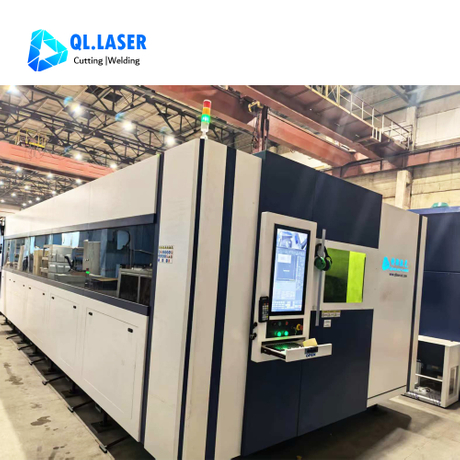
You use tube laser cutting technology to shape metal tubes with incredible accuracy and speed. This process matters because industries like automotive and construction rely on it for custom solutions. The market for tube laser cutting expects to reach $1.5 billion by 2028, showing rapid growth. When you choose this technology, you gain:
Enhanced precision and faster production
Custom shapes for unique projects
Quick turnaround to meet deadlines
Flexibility for complex designs
Less material waste and higher quality
Key Takeaways
Tube laser cutting offers high precision and speed, making it ideal for complex designs and tight deadlines.
This technology reduces material waste, leading to cost savings and a lower environmental impact.
Operators can achieve intricate shapes and features in one step, enhancing productivity and product quality.
Choosing the right laser type, like fiber or CO2, is crucial for optimizing performance based on material needs.
Regular maintenance and automation features can significantly improve efficiency and extend the lifespan of tube laser cutting machines.
Tube Laser Cutting Overview
Definition and Key Concepts
You use tube laser cutting to shape and cut metal tubes with high accuracy. This technology relies on the science of lasers. A laser works by exciting atoms or molecules to release energy as light. Three main parts make this possible: the gain medium, the pumping source, and the resonant cavity. In tube lasers, the resonator has a tubular design. This design helps the laser beam stay stable and cool during operation.
Key parts of a tube laser include:
High-quality mirrors that direct the laser beam
Cooling systems that keep the machine from overheating
Pump assemblies that provide energy for the laser
The process changes outside energy into a focused beam of light. This beam cuts through metal with great precision. You may hear terms like "stimulated emission," which means the laser creates light by exciting atoms. The "resonant cavity" is the space where the light bounces and grows stronger. "TEM00 mode" describes a laser beam with a smooth, even shape.
Tip: Optimized tube laser designs give you a beam with even intensity and low spread. This means you get clean, sharp cuts every time.
Importance in Fabrication
Tube laser cutting has changed how you build things with metal tubes. You can cut tubes in three dimensions, which lets you create complex shapes and custom designs. This technology makes it easy to join parts together. For example, you can use slot and tab assembly to speed up welding. You save time because the pieces fit together perfectly.
You can also cut tubes at angles, such as miter cuts, to make square or rectangular frames from one piece. This reduces the number of parts you need and lowers your costs. The process gives you consistent results with tight tolerances. Your finished products have higher quality and look more professional.
You get faster production because the machine works quickly.
You reduce mistakes and waste less material.
You can handle more projects and meet tight deadlines.
Tube laser cutting helps you stay competitive in industries like automotive, construction, and furniture. You can offer better products and complete jobs more efficiently.
Tube Laser Cutting Process
Working Principles
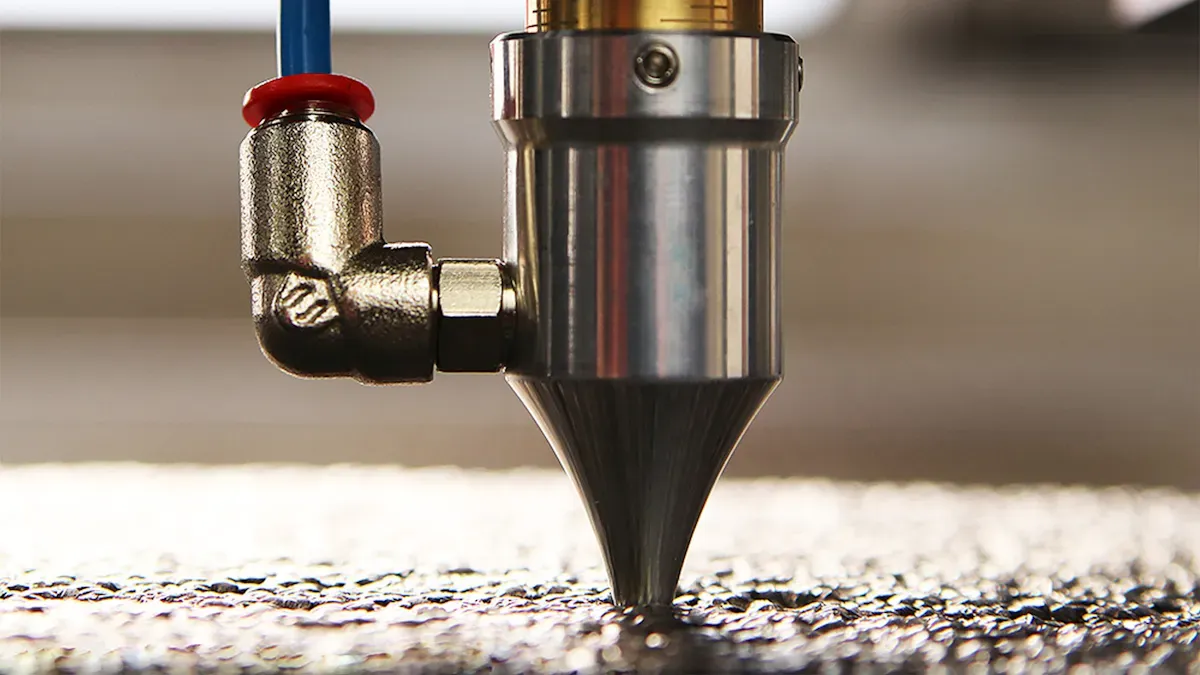
You use tube laser cutting to shape tubes with a focused laser beam. The laser melts or vaporizes the material, creating clean and precise cuts. A CNC system controls the movement of the tube and the laser head. This allows you to cut complex shapes and angles with high accuracy. You can finish features like holes, bevels, and notches in one operation. Compared to traditional methods like sawing or drilling, tube laser cutting gives you faster results and cleaner edges. You do not need much preprocessing or postprocessing. You waste less material and get consistent quality.
Note: Tube laser cutting lets you cut complex shapes without tool wear. You save time and reduce the need for secondary processing, such as welding or grinding.
You achieve high precision and speed.
You handle complex designs easily.
You minimize manual labor and material waste.
Fiber vs. CO2 Lasers
You can choose between fiber lasers and CO2 lasers for tube cutting. Each type has strengths and weaknesses. The table below shows the main differences:
Feature | Fiber Laser | CO2 Laser |
Energy Efficiency | More energy-efficient | Less energy-efficient |
Maintenance | Requires minimal maintenance | Requires regular maintenance |
Cutting Speed | Excels at cutting thin metals | Better for thicker materials |
Material Compatibility | Best for metals like stainless steel | Suited for non-metal materials |
Thickness Handling | Limited for thick materials | Better for thicker tubes |
Operating Costs | Lower operating costs | Higher energy consumption |
You use fiber lasers when you need precision cutting for metals like stainless steel, carbon steel, and aluminum alloys. Fiber lasers work well with reflective materials and give you high accuracy. You use CO2 lasers for thicker tubes and non-metal materials. CO2 lasers remain important for cutting thick steel tubes. Most fabricators prefer fiber lasers because they offer faster cutting, lower operating costs, and less maintenance.
Main Process Steps
You follow several steps to complete tube laser cutting. Each step ensures you get accurate and high-quality results.
You secure the tube between chucks. The chucks rotate and feed the tube into the cutting area.
You prepare the material and check its alignment.
You calibrate the laser. The high-power laser source, often a fiber laser, generates a focused beam.
The CNC system synchronizes tube rotation and laser movement.
The laser melts or vaporizes the material, creating a narrow kerf.
You finish features like holes, bevels, and notches in one operation.
You cool the cut area to prevent overheating.
You perform post-processing, such as cleaning or inspecting the finished tube.
Tip: Proper material preparation and laser calibration help you achieve the best results. You reduce errors and improve the quality of your cuts.
You control each stage with precision. You save time and reduce waste. You get clean edges and consistent shapes. Tube laser cutting gives you flexibility for custom projects and complex designs.
Machine Types
Fiber Laser Cutters
You often choose fiber laser cutters for their high precision and speed. These machines let you cut intricate shapes with smooth, burr-free edges. You can work with many materials, such as stainless steel, aluminum, brass, and copper. Fiber laser cutters handle round, square, rectangular, and oval tubes. You get fast production and less downtime because the laser does not touch the material. This non-contact method prevents tube deformation. Most fiber laser cutters come with advanced CNC systems. You can automate your workflow and connect the machine to your production line. Maintenance stays low because fiber lasers last a long time.
High precision for detailed cuts
Versatile for different metals and tube shapes
Fast and efficient for large jobs
Non-contact cutting for clean results
Easy automation and low maintenance
CO2 Laser Cutters
CO2 laser cutters give you a lower starting cost. You can use them for non-metallic materials and some metals. These machines work well for thick tubes and special materials like titanium. However, you may notice higher operating costs and more complex maintenance. CO2 lasers use more energy than fiber lasers. You might pick a CO2 laser if you need to cut a wide range of materials and want a lower initial investment.
Laser Type | Initial Cost | Operating Cost | Energy Efficiency |
CO2 | Lower | Higher | Lower |
Fiber | Higher | Lower | Higher |
Advanced Features
Modern tube laser cutting machines offer features that boost your productivity. You can use an intelligent bus operating system to streamline your process. Automatic loading and unloading save you time and reduce labor costs. Advanced software helps you use materials wisely and cut waste. Servo follow-up support keeps your cuts accurate during tube rotation.
Feature | Description |
Intelligent Bus Operating System | Streamlines the cutting process, solving efficiency and cost issues. |
Automatic Loading and Unloading | Saves time and labor, ensures careful material handling. |
Advanced Software for Optimization | Reduces waste and improves production efficiency. |
Servo Follow-up Support | Maintains accuracy and consistency during rotation cutting. |
Pros and Cons
You should compare different machine types before you decide. Each method has strengths and weaknesses.
Cutting Method | Advantages | Disadvantages |
Mechanical Sawing | Fast, simple | Rough edges, limited shapes |
Plasma Cutting | Good for thick tubes | Wide heat zone, rough cuts |
Waterjet Cutting | Smooth edges, no heat | Slow, costly, not ideal for thin tubes |
Flat Sheet Laser Cutting | Precise for flat parts | Only 2D cuts, manual tube loading |
Tube Laser Cutting | High precision, clean edges, complex shapes | High investment, best for large batches, possible discoloration |
CO2 Laser Cutting | Cuts many materials, low initial cost | High energy use, complex upkeep, less effective on shiny metals |
Fiber Laser Cutting | Versatile, precise, low maintenance | Higher initial cost |
Tip: You can match your machine choice to your project needs. Think about your material, shape, and production volume.
Materials and Tube Profiles
Supported Metals and Non-Metals
You can use tube laser cutting to process a wide range of materials. Most machines handle metals, but some also work with certain plastics. You get reliable results when you choose the right material for your project. Here are the most common materials you can cut:
Stainless Steel
Aluminum
Titanium
Brass
Copper
Certain Plastics
Stainless steel and aluminum are popular choices because they resist corrosion and offer strength. Titanium gives you lightweight parts for special applications. Brass and copper work well for decorative or electrical projects. Some machines let you cut plastics, which helps you create custom parts for non-metal uses.
Tip: Always check your machine’s compatibility before you start cutting a new material.
Tube Shapes and Geometries
You can cut many tube shapes and profiles with tube laser cutting. This technology lets you create simple and complex designs. You can handle standard shapes or custom profiles. Here are some shapes you can process:
Round tubes
Square tubes
Angle sections
Rectangular tubes
Beam profiles
Formed shapes
Custom extruded profiles
You can build frames, supports, and decorative pieces with these shapes. Custom extruded profiles help you meet unique project needs. You get flexibility and precision for every job.
Thickness Capabilities
You need to know the thickness limits for your material. Tube laser cutting works best on thin-walled tubes. Most machines cut materials less than 0.5 to 1 inch thick. The maximum thickness depends on the material and machine power. Here is a quick guide:
Material Type | Typical Thickness Capability |
Thin-walled materials | Less than 0.5 to 1 inch |
Material | Maximum Thickness Capability |
Stainless Steel | Up to 10 mm |
Mild Steel | Up to 20 mm |
You get clean cuts and high accuracy when you stay within these limits. Thicker tubes may need special machines or slower cutting speeds.
Note: Always check your machine’s specifications for thickness before you start your project.
Precision and Tolerances
Cutting Accuracy
You can achieve very high accuracy with tube laser cutting. The laser beam creates a narrow and focused cut, which helps you make detailed shapes. Several factors affect how precise your cuts will be:
The shape of the laser beam matters. A tapered beam can make the cut slightly wider at the top than at the bottom, especially in thicker tubes.
The spot size of the laser is important. A smaller spot size, sometimes as small as 0.01mm, lets you make very fine and detailed cuts.
The type of material changes the results. Stainless steel usually gives you smoother and more accurate cuts than aluminum.
The thickness of the tube affects precision. Thinner tubes allow for tighter tolerances and smaller cutting gaps.
The cutting system and the type of gas you use also play a role in how clean and accurate your cuts are.
Tip: For the best results, use thin materials and choose a laser system with a small spot size.
Comparison With Traditional Methods
You get much higher precision with tube laser cutting than with older cutting methods. Here are some key differences:
Tube laser cutting can reach tolerances within thousandths of an inch, which is much tighter than most manual methods.
You can cut complex shapes and add features like bevels or holes in one step, saving you time.
Traditional methods often need manual adjustments, which can lead to mistakes and less accurate cuts.
Laser cutting lets you make self-fixturing parts, which fit together easily and help you assemble projects faster.
If you want to create parts that fit perfectly and look professional, tube laser cutting gives you a clear advantage over sawing or drilling.
Tube Laser Cutting Advantages
Precision and Flexibility
You gain unmatched precision and flexibility when you use tube laser cutting. This technology lets you create complex shapes and detailed designs that are hard to achieve with older methods. You can cut:
Intricate geometries and patterns
Multi-angle bevels for strong joints
Custom 3D shapes for special projects
You also benefit from automated loading, which helps you handle long tubes and large batches with ease. This flexibility means you can take on more challenging jobs and deliver better results.
Speed and Productivity
You save time with tube laser cutting because the process is fast and efficient. The laser moves quickly through the material, so you finish jobs much faster than with traditional cutting tools. This speed helps you meet tight deadlines and handle high production volumes. When you switch to laser technology, you also improve product quality and design options. You work more efficiently and boost your overall productivity.
Material Savings
The precision of laser cutting results in less material waste, reducing the amount of scrap that needs to be disposed of or recycled. This not only lowers production costs but also minimizes the environmental impact of the manufacturing process.
You use almost all your material because the cuts are clean and accurate. You do not need as many finishing steps, which saves even more material. When you cut complex shapes, you still keep waste to a minimum. This efficiency helps you save money and protect the environment.
Safety Benefits
Safety Benefit | Description |
Improved operator safety | Non-contact cutting reduces the risk of injury, aligning with OSHA guidance. |
You stay safer when you use tube laser cutting machines. The laser never touches the material, so you avoid many common injuries. Always remember to follow safety rules, wear eye protection, and never leave the machine running unattended. These steps help you work safely every day.
Applications
Automotive and Aerospace
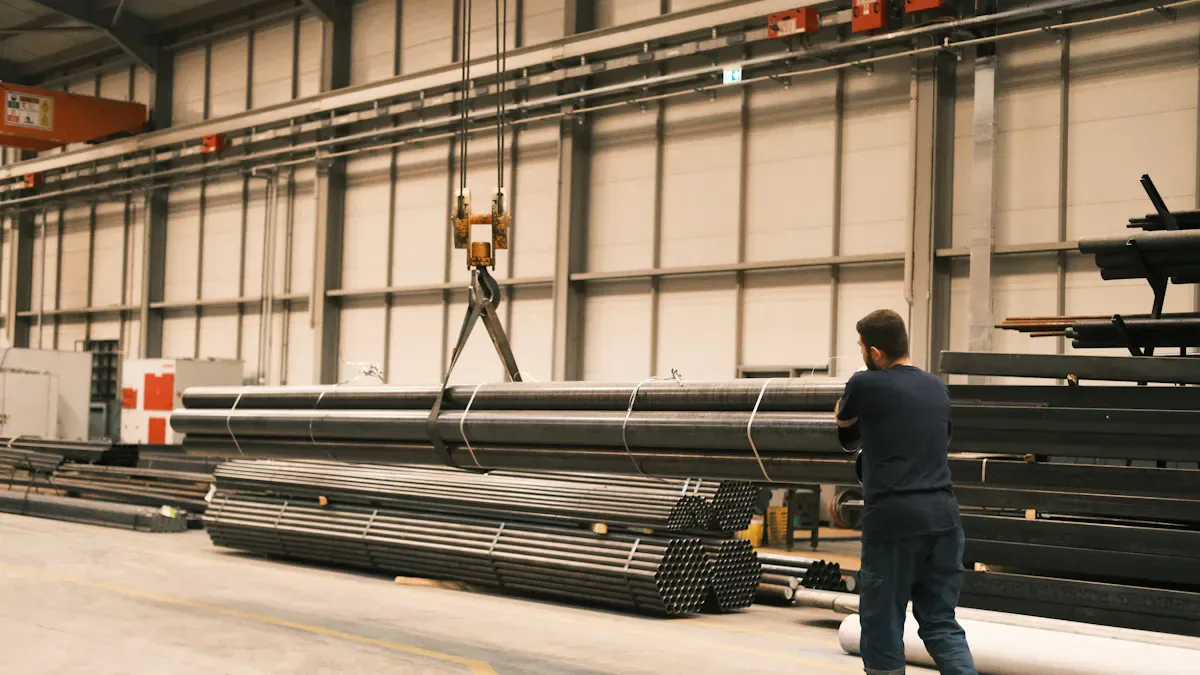
You see tube laser cutting used in both automotive and aerospace industries. This technology helps you create parts with high precision and strength. You can cut tubes for exhaust systems, chassis parts, and roll cages in cars. In airplanes, you use it for frames, landing gear, and engine components. The table below shows common applications:
Industry | Applications |
Automotive | Exhaust systems, chassis parts, roll cages |
Aerospace | Aircraft frames, landing gear, engine components |
You gain faster production and better quality. You also meet strict safety standards in these fields.
Construction and Architecture
You use tube laser cutting to customize shapes and sizes for your projects. This process lets you create intricate designs that make buildings look unique. You finish jobs quickly because the cutting speed is high. You also cut complex geometries with tight tolerances. Bevel cutting gives you more design options. You produce self-fixturing parts, which makes assembly and welding easier.
Custom shapes and sizes for each project
Intricate designs for architectural beauty
High-speed cutting for tight deadlines
Complex geometries with tight tolerances
Bevel cutting for flexible designs
Self-fixturing parts for easy assembly
You improve both the look and strength of your structures.
Medical and Furniture
You rely on tube laser cutting to make medical devices and furniture. In medicine, you produce surgical instruments, implants, prosthetics, and device housings. You need high precision for safety and durability. You can create custom implants for each patient. In furniture, you cut tubes for chairs, tables, and decorations. You use fiber laser machines to make intricate and customized designs. This helps you meet modern interior design needs.
Surgical instruments, implants, prosthetics
High precision for safety and durability
Custom implants for patient needs
Intricate designs in chairs and tables
Customization for modern furniture
You deliver quality and creativity in both fields.
Scientific and Custom Uses
You find tube laser cutting in many scientific and custom projects. You cut parts for fitness equipment, machine frames, and specialized components. You make stents and orthopedic implants for medical research. You create unique structures and patterns for architecture and furniture. You also use this technology in general manufacturing to build frames and custom parts.
Note: You can use tube laser cutting for almost any project that needs precision and flexibility.
Top Machines and Selection
Key Attributes
You want a tube laser cutting machine that delivers top performance. The best machines combine precision, speed, versatility, and smart integration. You can see these features in the table below:
Attribute | Description |
Zero-Tail Cutting | Minimizes tail waste to ≤30 mm or true zero-tail, saving material and improving cost efficiency. |
Tube Compatibility | Handles a wide range of materials, matching your production needs. |
Cutting Precision & Edge Quality | Offers repositioning accuracy ≤±0.03 mm, kerf width 0.2–0.5 mm, burr-free edges, and bevel cutting for tight fit-up. |
Automation Level | Includes automated loading/unloading and intelligent machining features to boost efficiency and reduce labor. |
Product Design | Balances strength and weight, allows bending of tube profiles, and reduces production costs. |
Capacity | Supports tubes from 20 to 40+ feet, measured by max weight per foot. |
Shape and Seam Detection | Detects welded tube seams to prevent assembly issues. |
Intelligent Functions | Features Wi-Fi for remote analysis and troubleshooting, plus roller tables to reduce friction. |
Tip: Machines with high precision and automation help you produce parts quickly and save material.
Leading Brands
You can choose from several trusted brands in the tube laser cutting market. These companies offer reliable machines with advanced features:
TRUMPF – Delivers high-precision laser cutting technology.
Bystronic – Provides efficient and reliable equipment.
Amada – Offers strong technical support and innovative designs.
Mazak – Excels in automation and system integration.
BLM Group – Specializes in laser solutions for tube processing.
ALEKVS Machinery – Supplies cost-effective and practical tube cutting systems.
Selection Tips
You need to match your machine choice to your fabrication needs. Consider these points:
Confirm the main sizes and material types you work with. Avoid machines that are too powerful or too weak for your jobs.
Check the machine’s precision and automation features. High precision and automated loading/unloading improve workflow and reduce labor.
Think about laser power and type. Fiber lasers work well for metals and complex shapes. CO2 lasers handle thicker materials and some non-metals.
Look for intelligent functions like Wi-Fi and roller tables. These features make operation easier and help with troubleshooting.
Remember that cutting accuracy drops as material thickness increases. Thicker tubes may need more powerful lasers.
Compare machine costs and maintenance needs. Cheaper machines may cause more downtime and higher operational issues.
Note: You must understand how different materials respond to laser cutting. Adjust machine settings to achieve the best quality for each job.
Fabricator Guidance
Design Tips
You can improve your results by planning your designs for tube laser cutting. Start with clear CAD drawings. Use standard tube sizes when possible. This helps you save material and reduce costs. Design parts with self-fixturing features like tabs and slots. These features make assembly easier and faster. Avoid very tight corners or tiny holes. The laser may not cut these shapes cleanly. Leave enough space between cuts to prevent heat buildup.
Tip: Test your design with a small prototype before starting full production.
Operator Skills
You need skilled operators to get the best from your tube laser cutter. Learn how to set up the machine and load materials correctly. Understand how to adjust laser power and speed for different metals. Practice reading and editing CNC programs. Good operators check alignment and calibration before each job. They also inspect finished parts for quality.
Skill Area | Why It Matters |
Machine Setup | Ensures accurate cutting |
CNC Programming | Handles complex shapes |
Quality Inspection | Maintains high standards |
Safety Practices
You must follow safety rules when using tube laser cutters. Always wear safety glasses to protect your eyes from laser light. Keep your hands away from moving parts. Never leave the machine running without supervision. Make sure the work area stays clean and free of flammable materials. Use proper ventilation to remove fumes.
Alert: Never bypass safety interlocks or guards. These features protect you from injury.
Maximizing Benefits
You can get the most from your tube laser cutting machine by using automation features. Set up automatic loading and unloading to save time. Use nesting software to arrange parts and reduce waste. Schedule regular maintenance to keep your machine running smoothly. Train your team on new features and updates.
Use automation for higher productivity
Optimize material use with software
Maintain equipment for long life
Keep learning to stay ahead
You will see better results and lower costs when you follow these steps.
Limitations and Trends
Cost and Investment
You need to plan carefully before you invest in tube laser cutting technology. The machines require a large upfront cost. You must also think about ongoing expenses like energy, labor, and maintenance. The total cost includes not just the machine, but also cooling systems, fume extraction, and safety equipment. These items help your machine run safely and meet regulations.
When you look at the return on investment (ROI), you should consider more than just the purchase price. Factors like how fast you can produce parts, how much material you save, and how much labor you need all affect your costs. Fiber laser machines often give you better ROI because they cut faster, waste less material, and combine several steps into one. Over time, these savings can be more important than the initial cost.
Tip: Regular maintenance and smart planning help you get the most value from your investment.
Material Limits
Tube laser cutting works best with metals like steel, stainless steel, and aluminum. You can also cut some plastics, but not all materials are suitable. Very thick tubes may need special high-power lasers. Some reflective metals, such as copper and brass, can be harder to cut and may require extra care or special settings.
Material Type | Suitability for Tube Laser Cutting |
Stainless Steel | Excellent |
Aluminum | Very Good |
Copper/Brass | Possible, but needs care |
Plastics | Limited, depends on type |
Very Thick Metals | Needs ultra-high power lasers |
You should always check your machine’s capabilities before starting a new project.
Technology Advances
You see new technology making tube laser cutting even better. Ultra-high power fiber lasers, such as 25,000W models, now let you cut very thick materials quickly. Machines today can reach tolerances as tight as ±0.1 mm. This means you can make very precise parts for many uses.
Modern systems use automation and artificial intelligence (AI) to plan cutting paths in real time. This reduces mistakes and speeds up production. You also benefit from lower energy use and less material waste. Advanced exhaust and filtration systems help keep your workspace clean and safe, supporting greener manufacturing.
Ultra-high power fiber lasers for thick materials
Precision cutting with tight tolerances
Automation and AI for smarter, faster work
Lower energy use and less waste
Better exhaust and filtration for safety
Note: Staying updated with new technology helps you stay ahead in the industry.
You gain many benefits from tube laser cutting technology. You get precise cuts, fast production, and less waste. This technology changes how you work with metal tubes. If you want to improve your projects, start by learning more about machine options and safety. Stay curious and keep up with new advances.
Tip: Join workshops or online courses to build your skills and stay ahead in fabrication.
FAQ
What materials can you cut with tube laser cutting?
You can cut metals like stainless steel, aluminum, brass, and copper. Some machines also cut plastics. Always check your machine’s specifications before you start a new project.
How accurate is tube laser cutting?
You achieve tolerances as tight as ±0.03 mm. This means you get clean, precise cuts for complex shapes. Accuracy depends on your machine and material.
Is tube laser cutting safe for operators?
You stay safe when you follow proper safety rules. The laser never touches the material. Wear safety glasses and keep your workspace clean. Never leave the machine running unattended.
What shapes can you create with tube laser cutting?
You can cut round, square, rectangular, and custom tube profiles. This technology lets you make intricate designs and complex geometries for many projects.
How does tube laser cutting compare to traditional methods?
Tube laser cutting gives you faster production, cleaner edges, and less material waste. You finish jobs quickly and get higher quality than with sawing or drilling.