Introduction
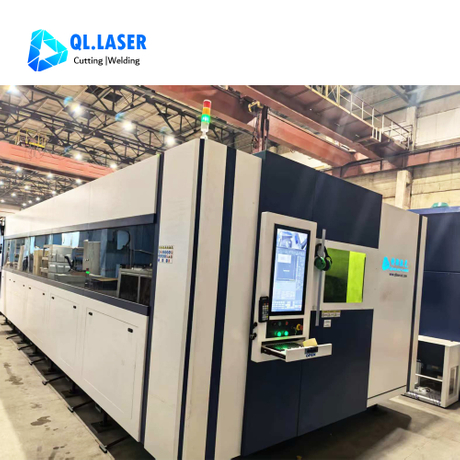
In modern shipbuilding and marine engineering manufacturing, heavy-duty gantry laser cutting machines have become core equipment for processing thick marine steel plates, hull structural parts and deck accessories. To meet the high-precision lofting, welding assembly and full-life traceability requirements of ship production, professional laser cutting machines are usually equipped with two mainstream marking configurations: powder marking and inkjet marking.
Most shipyard manufacturers confuse the applicable scenarios of these two functions. Although both are supporting marking systems for shipbuilding laser cutting machines, they differ greatly in working principle, marking content, service cycle and production value. This article deeply analyzes their respective industrial applications and essential differences, helping ship enterprises select matched laser cutting equipment to improve processing accuracy and standardized production level.
1. What is Laser Powder Marking? Core Applications in Shipbuilding
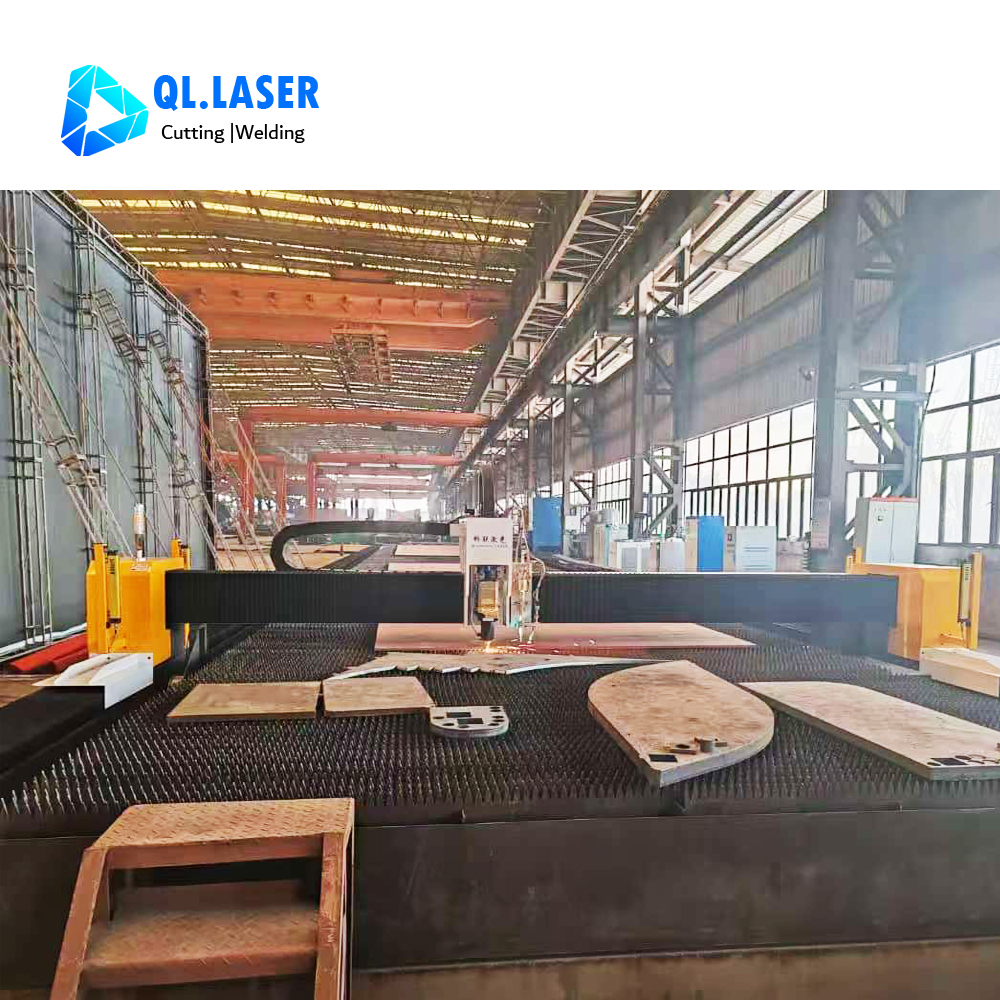
Laser powder marking, also known as zinc powder marking, is a professional lofting and line-marking technology exclusive to heavy-duty shipbuilding laser cutting machines. It adopts high-temperature melting spraying technology to attach high-adhesion zinc powder lines on the surface of marine steel plates, realizing synchronous marking and cutting operation.
This marking method focuses on large-scale contour lofting and process datum marking, which is irreplaceable in ship plate blanking and welding preprocessing. Its core shipbuilding application scenarios are as follows:
First, ship steel plate layout and contour marking. It accurately draws cutting lines, bevel processing lines, assembly datum lines and edge trimming lines for hull outer plates, rib plates, bulkhead plates and deck steel plates. The marked lines are clear and standard, replacing traditional manual lofting which has large errors and low efficiency.
Second, welding process pre-marking. It marks welding positioning lines and assembly reference lines for segmented ship structures. The wear-resistant and anti-corrosion powder lines can withstand shipyard dust, salt fog and construction friction, ensuring accurate docking and welding quality of subsequent hull segments.
Third, batch blanking marking for thick marine plates. Matched with high-power heavy gantry laser cutting machines, it supports one-stop marking and cutting of ultra-long and ultra-large ship steel plates, perfectly adapting to intensive blanking production of large shipyards.
2. What is Laser Inkjet Marking? Core Applications in Shipbuilding
Laser inkjet marking is a digital coding and identification marking system for finished ship parts. It uses high-precision non-contact inkjet technology to spray print variable text, numbers, codes and patterns on the surface of cut steel workpieces, focusing on product information recording and full-life traceability.
Different from powder marking’s line lofting function, inkjet marking serves the standardized management of ship parts, with unique application values in shipbuilding:
First, ship component information coding and traceability. It sprays part numbers, drawing versions, material grades, production batches and segmented affiliation codes on finished hull accessories, realizing full-process traceability from steel plate blanking to hull assembly and dock erection.
Second, personalized marking of special ship parts. It supports printing QR codes, specification parameters and process prompts on small and medium-sized ship structural parts, outfitting accessories and pipe fittings, facilitating rapid classification, inspection and installation of ship parts.
Third, production data management assistance. The digital inkjet marking content can be matched with shipyard ERP and production management systems, helping enterprises realize intelligent and refined management of ship processing orders.
3. Core Differences Between Powder Marking and Inkjet Marking in Shipbuilding
Many ship owners regard the two marking functions as repetitive configurations, but they are complementary and non-replaceable in actual shipyard production, with clear core differences:
1. Different marking purposes: Powder marking is for process lofting and construction reference, serving cutting and welding processes; inkjet marking is for product identification and data traceability, serving finished part management and after-sales inspection.
2. Different marking content: Powder marking mainly outputs continuous geometric lines, contour lines and datum lines without text and code functions; inkjet marking focuses on variable text, numbers, QR codes and specification information, supporting diversified digital marking.
3. Different durability and adaptability: Powder marking lines have strong adhesion, wear resistance and salt fog resistance, suitable for long-term outdoor construction and multi-process turnover of ship steel plates; inkjet marking has clear font and high recognition, suitable for permanent information recording of finished parts.
4. Different working procedures: Powder marking is synchronized with laser cutting, completed in one step during steel plate blanking; inkjet marking is mostly carried out after cutting forming, completing accurate coding of finished workpieces.
5. Different production values: Powder marking improves ship cutting and welding precision, reducing manual lofting errors; inkjet marking standardizes ship part management, realizing digital and intelligent production of shipyards.
4. How to Match Two Marking Functions for Shipyard Production?
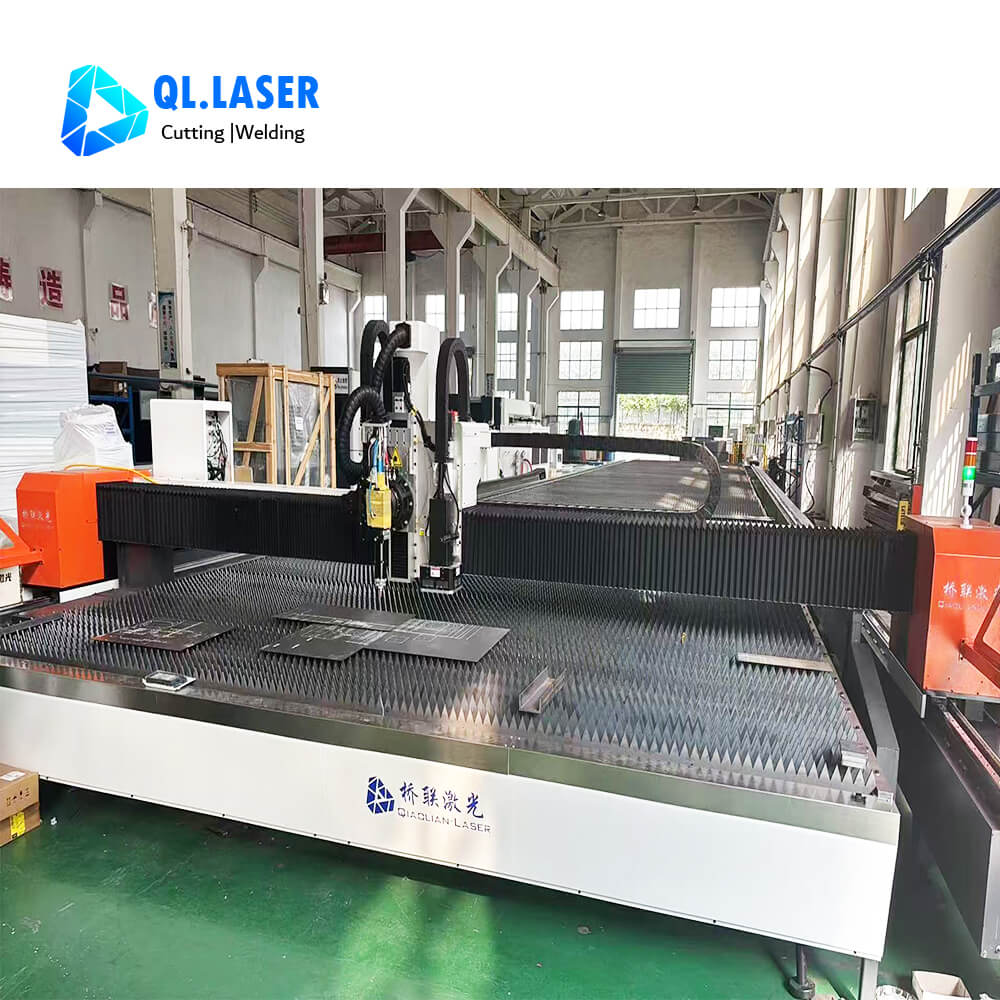
For modern shipbuilding enterprises with high-precision and standardized production demands, a high-power heavy-duty gantry laser cutting machine equipped with both powder marking and inkjet marking systems is the optimal solution.
The powder marking system undertakes the basic lofting and positioning work of ship steel plate processing, ensuring the dimensional accuracy and assembly precision of hull structural parts. The inkjet marking system realizes full information recording and traceability of each ship part, solving the problems of messy part management and difficult quality tracking in traditional shipbuilding.
The dual-mark configuration perfectly matches the whole-process production needs of ship plate blanking, cutting, welding and assembly, greatly improving the overall production efficiency and standardized manufacturing level of shipyards.
Conclusion
Powder marking and inkjet marking are two core supporting technologies for shipbuilding laser cutting machines, with their own unique application scenarios and functional advantages. Powder marking focuses on process lofting and construction positioning, while inkjet marking focuses on digital coding and quality traceability. Equipping both functions on heavy gantry laser cutting machines can fully meet the high-standard manufacturing requirements of modern shipbuilding, marine engineering and offshore equipment, becoming the mainstream configuration for high-efficiency shipyard production.