Manufacturing faces a critical bottleneck today. A severe shortage of skilled welders collides with an intense demand for higher production throughput. Facilities struggle to fulfill orders while maintaining strict quality standards.
Moving toward automation does not mean replacing human skill entirely. Instead, you should view it as a strategic reallocation of valuable resources. Highly skilled operators can shift to complex tasks while machines handle repetitive work.
This guide provides an objective framework for evaluating your operational needs. You will discover whether traditional manual welding, collaborative units, or fully automated cells fit your production floor best. We will explore key evaluation metrics to help you make an informed decision.
Key Takeaways
Volume vs. Variance: Robotic welding excels in high-volume, low-mix environments due to unmatched repeatability; manual welding remains superior for high-mix, custom, or repair applications.
Cost Realities: While a welding robot requires significant upfront CapEx (including hidden fixturing costs), it drastically lowers long-term OpEx through reduced scrap, optimized consumable usage, and higher duty cycles.
The Cobot Bridge: Collaborative robots (cobots) offer a middle-ground solution, providing easier programming and lower spatial footprints for shops not ready for traditional heavy-payload robotic cells.
Defining the Business Problem: When to Evaluate Automation
Every manufacturing facility reaches a tipping point. Recognizing this moment requires a hard look at your daily operations. Leaders must identify specific friction points on the floor. Automation becomes necessary when traditional methods restrict your growth.
Production bottlenecks serve as the most obvious trigger. You might notice fabricated parts stacking up near the welding bays. The upstream cutting and bending machines outpace your joining capacity. Assembly lines stall constantly. You miss delivery dates consistently. Masking these issues through endless overtime shifts fails long-term. Overworked staff eventually burn out. Efficiency plummets as fatigue sets in across the team.
Quality issues and rework efforts compound these bottlenecks. Manual inconsistency causes major operational disruptions. Operators naturally tire during long shifts. Torch angles drift slightly. Travel speeds vary from morning to evening. These minute variations compromise overall metallurgical integrity. You end up with weak joints. Excessive spatter requires extensive post-weld cleanup. Grinding and rework consume hundreds of labor hours monthly. High scrap rates destroy project profit margins completely.
Labor constraints present an unavoidable scaling barrier. You simply cannot scale operations solely through hiring anymore. Certified professionals remain geographically scarce. Trade schools produce fewer graduates each year. Many experienced veterans are retiring from the industry rapidly. Relying entirely on manual labor leaves your production schedule vulnerable to sudden staff shortages.
Robotic Welding vs Manual: Core Evaluation Dimensions
Choosing a production path requires analyzing your specific operational parameters. You must weigh the technical strengths of both human operators and machines. Neither approach offers a universal solution for every fabrication challenge.
Precision, Consistency, and Quality
A programmed machine executes commands flawlessly. It maintains exact travel speeds continuously. It holds precise torch angles without wavering. It regulates voltage perfectly throughout the entire cycle. This strict adherence to programmed parameters guarantees uniform bead profiles. It ensures deep, consistent joint penetration on every single part. Quality control becomes a highly predictable process. Destructive testing yields identical results batch after batch. You eliminate the human variable from the quality equation.
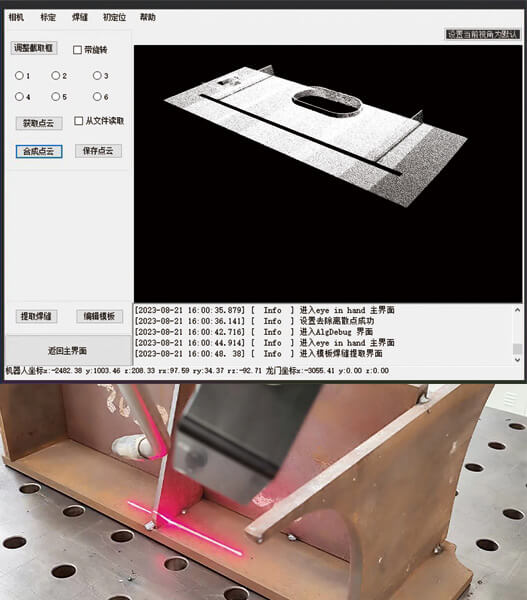
However, human operators possess an invaluable trust element. They rely on intuitive tactile feedback. They use visual cues instantly. A skilled professional adapts to poor part fit-up immediately. They adjust for variable gap widths naturally. They manage dirty or oxidized materials on the fly. Standard automated systems lack this crucial adaptability. Machines require expensive vision systems to achieve similar flexibility. Adding seam-tracking sensors increases cell complexity significantly. For highly variable or repair-focused work, human intuition remains unmatched.
Speed, Duty Cycle, and Throughput
Arc-on time defines operational efficiency. Human operators achieve roughly 20-30% duty cycles on average. Fatigue forces frequent physical breaks. Repositioning heavy structural parts takes time. Slag cleaning and part inspection add continuous delays. Workers must adjust their personal protective equipment frequently. These necessary pauses reduce overall daily output.
In contrast, automated cells routinely exceed 75-85% arc-on time. They operate continuously between part changeovers. They do not experience physical fatigue. They do not require breaks. They transition between weld seams in fractions of a second. This blistering pace transforms your production capacity overnight.
Throughput predictability matters immensely for production planning. Machine output acts as a fixed, reliable metric. Planners can schedule exact delivery windows confidently. They know precisely how many units a cell produces per hour. Manual output fluctuates daily. Shift timing affects productivity. Operator fatigue changes output rates unpredictably. Predictable automation allows you to optimize your entire supply chain logistics seamlessly.
The Cobot Alternative: Bridging the Gap Between Manual and Fully Automated
Many fabricators assume automation requires massive facility overhauls. This misconception prevents smaller shops from adopting new technology. Collaborative solutions change this narrative entirely. They provide a highly accessible middle ground.
You must differentiate these solutions accurately. Traditional industrial units require heavy hard-fencing. They use complex safety interlocks to protect nearby workers. They move at dangerous, high speeds. They demand massive spatial footprints. Collaborative units operate differently. They feature built-in force sensors. They stop immediately upon human contact. They operate safely alongside your staff without restrictive barriers.
Ease of adoption stands out as their primary advantage. Off-line programming transforms the deployment process. Intuitive software removes heavy coding requirements completely. Lead-through teaching simplifies path creation dramatically. You simply guide the robotic arm physically along the seam. The system records the waypoints instantly. Your existing manual professionals become machine operators easily. They use their deep metallurgical knowledge to set the perfect parameters. The software handles the complex motion algorithms.
Flexibility drives their value in job shops. Redeployment happens quickly and easily. You can move these units between different workstations. High-mix environments benefit immensely from this mobility. Low-volume shops gain automation advantages without permanent floor space commitments. When evaluating a collaborative welding robot, look for intuitive interfaces. Fast changeovers ensure you maximize machine utilization across varied product lines.
Implementation Risks and Adoption Realities
Adopting new technology carries inherent risks. You must prepare your facility for the transition properly. Overlooking fundamental manufacturing principles guarantees project failure. Successful integration requires discipline and realistic expectations.
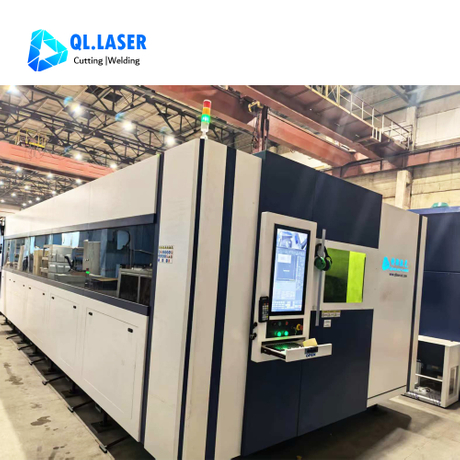
Part fit-up dictates your ultimate success. The principle of "garbage in, garbage out" applies ruthlessly to automation. Strict upstream fabrication tolerances remain absolutely mandatory. If joint gaps vary, the machine fails. It will deposit material exactly where the seam should exist. It misses the actual joint entirely if the part deviates. Precise upstream processing ensures success. Integrating precise upstream equipment is vital before advancing to Robotic Welding. High-quality laser cutting and accurate press brake bending provide the tight tolerances machines demand.
The skills pivot frightens many workforces. Employees often believe machines eliminate jobs entirely. This misconception hinders operational progress. Companies must pivot their workforce strategically. You must upskill your best personnel. They become your lead programmers. They supervise the automated cells daily. Their deep understanding of heat inputs remains crucial. You cannot automate their underlying industry expertise.
Realistic integration timelines prevent frustrating project delays. Deployment takes careful time and planning. You must outline these phases clearly:
Risk Assessment: Evaluate facility safety, power availability, and part suitability.
Cell Design: Engineer the exact physical layout and required tooling.
Tooling Fabrication: Build rigid, highly repeatable jigs to hold parts perfectly.
Final Runoff: Test the system under full production speeds before acceptance.
Operator Training: Ensure your staff understands basic troubleshooting and daily maintenance.
Skipping any phase jeopardizes the entire installation. Patient, methodical integration yields the best long-term results.
Strategic Shortlisting: Which Path is Right for Your Floor?
Evaluating your exact production profile drives the final decision. You must match the technology to your daily variance. Review your specific product mix objectively.
Table: Automation Readiness Comparison
| Production Profile | Recommended Approach | Primary Justification |
| Heavy repairs, field work, dirty materials | Manual | Requires human intuition, tactile feedback, and instant adaptability to varying conditions. |
| High-mix, low-volume, fast changeovers | Cobot Solutions | Provides easy programming, high mobility, and eliminates the need for massive safety fences. |
| High-volume, low-mix, strict repetition | Traditional Automated Cells | Delivers maximum arc-on time, blistering cycle speeds, and absolute parameter repeatability. |
Stick with traditional human operators if your shop handles unpredictable scenarios. Heavy equipment repairs demand visual assessment. One-off custom fabrications do not justify programming time. Structural field work requires ultimate mobility. Furthermore, if you lack precise upstream cutting machinery, automation will fail. Machines cannot overcome poor part preparation.
Evaluate collaborative units if you run a job shop. If you struggle to hire staff, cobots bridge the gap. They provide fast deployment capabilities. They empower your current workforce with advanced tools. You maintain flexibility while boosting overall arc-on time significantly.
Invest in traditional cells if you run dedicated production lines. High-volume environments demand absolute repeatability. Cycle time dictates your profitability directly. Hard tooling and heavy payloads require robust industrial solutions. These systems deliver the highest possible throughput metrics consistently.
Conclusion
Navigating the transition toward advanced manufacturing requires clear, objective analysis. Neither manual expertise nor automated systems offer a universally superior solution. The optimal choice hinges entirely on your part volume, product variance, and upstream manufacturing control.
Assess your specific production bottlenecks before selecting a technology path.
Ensure your upstream cutting and bending equipment provides the strict tolerances machines demand.
Upskill your top performers to manage and program new automated cells effectively.
Consider collaborative units for high-mix job shops requiring fast, flexible deployment.
Reserve traditional industrial cells for high-volume lines demanding maximum throughput.
Take immediate action to evaluate your facility. Conduct a detailed time-study on your highest-volume parts today. Document your current arc-on times and scrap rates accurately. Consult with an integration specialist to perform a comprehensive feasibility study. A professional facility audit will reveal exactly which solution aligns with your operational goals.
FAQ
Q: Can a welding robot handle custom or small-batch fabrication?
A: Traditional setups handle small batches inefficiently. Programming time outweighs production benefits. However, collaborative units excel here. They use intuitive teaching software. Operators can program new parts in minutes. This makes high-mix, low-volume fabrication highly viable.
Q: Do I need to hire a specialized programmer to run a robotic welding cell?
A: You do not necessarily need a specialized programmer. Modern offline programming software simplifies the process. Your existing skilled operators can program complex paths easily. They do not need heavy coding experience. Their metallurgical knowledge proves more valuable than software expertise.
Q: How long does it take to see an ROI on a welding robot?
A: A realistic payback period typically ranges from 12 to 24 months. This timeframe depends heavily on your shift structure. Improving your arc-on time accelerates returns significantly. Drastic scrap reduction also shortens the payback period. Maximizing machine utilization across multiple shifts yields the best results.
Q: Does robotic welding require better part fit-up than manual welding?
A: Yes. Machines lack human adaptability. They cannot intuitively fill inconsistent gaps. Precise upstream processing is critical. You must utilize accurate laser cutting and CNC bending beforehand. Tight tolerances ensure the automated torch follows the exact programmed seam perfectly.