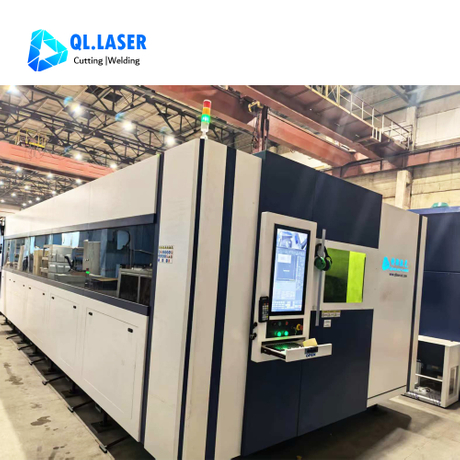
The manufacturing sector currently navigates a critical turning point. Chronic labor shortages routinely disrupt production schedules across the globe. Simultaneously, intense pressure to maintain profit margins makes industrial automation an absolute necessity. It is no longer a futuristic luxury reserved for massive corporations. However, generic discussions about automation often ignore daily shop floor realities. Instead, we must focus on specific operational efficiency drivers. A Welding Robot directly influences daily production in measurable ways. You can track this performance through arc-on time and overall throughput metrics. Strategic implementation of robotic welding dramatically reduces cycle times. It minimizes expensive material waste. It also stabilizes production forecasting for the long term. You will learn exactly how to achieve these gains. We will explore how to properly evaluate the financial and operational realities of your specific facility. Good part fit-up begins early in the process. Utilizing a reliable Sheet Metal Laser Cutting Machine ensures parts are ready for automated assembly. This holistic approach guarantees success.
Key Takeaways
Arc-On Time: A welding robot can increase arc-on time from an industry average of 30% (manual) to over 75%.
Solution Alignment: Efficiency gains depend heavily on matching the right system (collaborative vs. traditional) to your specific production volume and part mix.
Economic Reality: True ROI goes beyond labor replacement; it includes reduced rework, lower consumable waste, and predictable throughput.
Implementation Focus: Success requires upfront planning for fixture design, facility footprint, and workforce upskilling.
Beyond the Hype: How a Welding Robot Actually Drives Efficiency
Buyers frequently encounter vague marketing claims regarding automation. You must define efficiency in strict manufacturing terms to see actual value. Efficiency means consistent output per shift. It involves eliminating unpredictable production bottlenecks. It means maximizing the time your equipment actively adds value to raw materials. When you remove human fatigue and physical limitations from the equation, you transform a highly variable process into a reliable mathematical constant.
Maximizing Arc-On Time and Cycle Predictability
Manual welding output fluctuates wildly throughout a standard shift. Human operators face distinct physical limits. They take mandatory breaks. They experience fatigue during long afternoon hours. They spend significant time grinding, cleaning, and repositioning heavy parts. This variable manual output creates severe scheduling headaches for production managers. You cannot accurately predict how many units will ship by Friday.
A robotic cell shifts this dynamic completely. It provides fixed, predictable cycle times. It eliminates lengthy inter-pass delays. The arc stays on much longer. Dual-station positioners allow operators to load new parts while the machine welds simultaneously. The equipment moves rapidly between joints. You can forecast daily throughput accurately. You can confidently promise exact delivery dates to your clients.
Quality Consistency and Rework Reduction
Precise path planning remains crucial for high-quality outcomes. Advanced systems maintain consistent heat input on every single pass. This extreme precision reduces common manufacturing defects. Spatter, porosity, and burn-through diminish significantly. You achieve deep, reliable penetration on every joint.
Hidden efficiency drains often go unnoticed by management. Rework consumes valuable labor hours quietly. Scrap materials destroy profit margins invisibly. Grinding away excess spatter wastes abrasive discs and manpower. Getting the weld right the first time eliminates these hidden costs entirely. Consistent quality means parts flow directly to the painting or assembly department without costly detours.
Optimizing Existing Assets
Efficiency does not always demand buying entirely new equipment. You can optimize your existing robotic assets effectively. You might already own older, underutilized cells. You can upgrade their core software to improve path planning. Retrofitting older systems extends their useful lifespan.
Adding advanced tactile sensors improves adaptability. Integrating laser seam tracking allows older arms to handle slight part variations. This strategy maximizes the return on previous capital investments. It proves you do not need a brand-new facility to realize modern productivity gains.
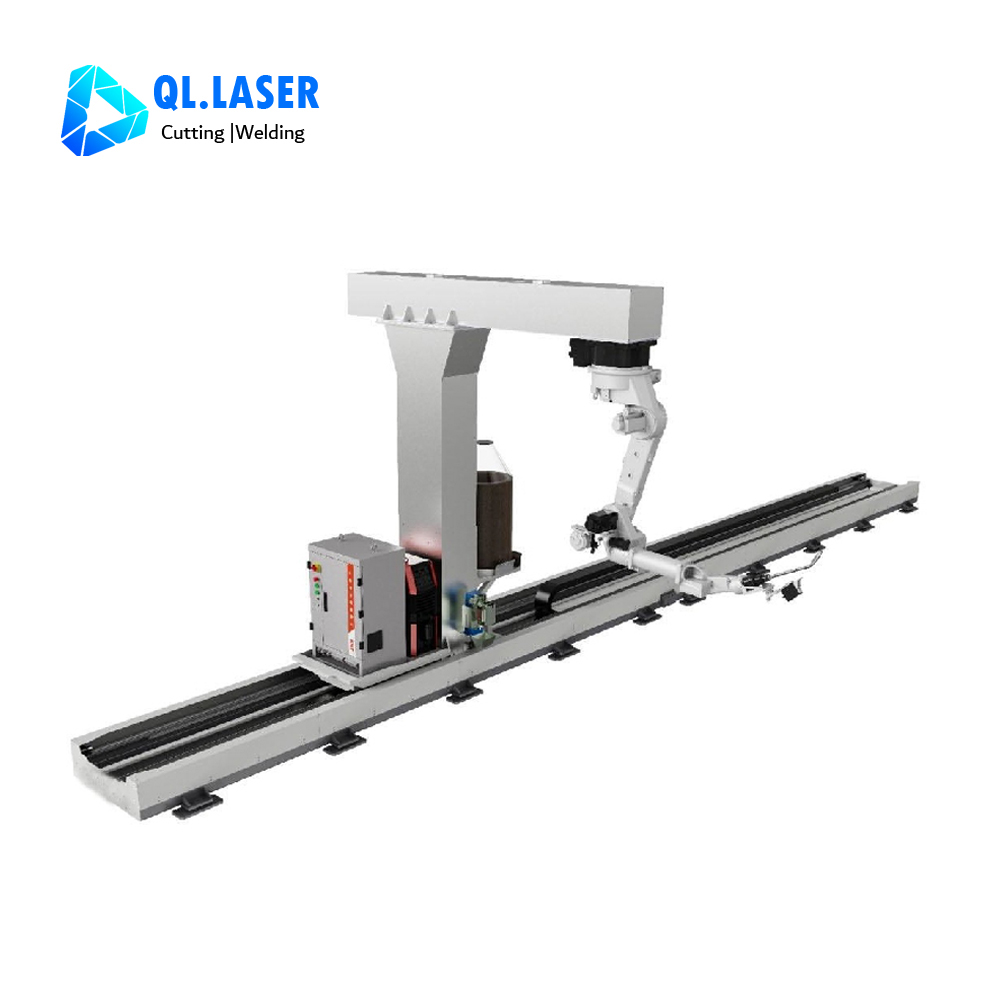
Comparing Solutions: Collaborative vs. Traditional Industrial Welding Robots
You need a clear decision framework before investing capital. Choosing the right automation type depends entirely on your operational realities. There is no universal solution. You must evaluate your specific product mix. You must measure your available floor space accurately.
Traditional Industrial Systems
Traditional setups are best for high-volume environments. They excel in low-mix production where designs rarely change. High-speed movements drive peak efficiency here. They handle heavy payload capacities easily. They run continuously across multiple shifts without pausing.
However, noticeable trade-offs exist. They require significant floor space to operate safely. You must install hard guarding. Safety fencing is mandatory. Furthermore, your team needs specialized programming knowledge. Reprogramming a traditional cell for a completely new part often takes hours or days.
Collaborative Robots (Cobots)
Cobots are best for high-mix shops. Small and medium businesses love them. They fit seamlessly into tight facility footprints. Rapid redeployment serves as their primary efficiency driver. Lead-through programming makes teaching incredibly intuitive. You physically guide the arm along the desired path. They require minimal safety infrastructure due to built-in force sensors.
They also carry trade-offs. Their travel speeds are noticeably slower compared to traditional industrial arms. They cannot handle massive payloads. They suit lighter, diverse manufacturing tasks rather than heavy structural fabrication.
Table: Automation Solutions Comparison
| System Feature | Traditional Industrial | Collaborative (Cobot) |
| Production Fit | High Volume, Low Mix | High Mix, Low Volume |
| Travel Speed | Extremely Fast | Moderate / Regulated |
| Floor Space Needed | Large footprint (enclosures) | Compact (often on mobile carts) |
| Programming Method | Offline or Teach Pendant | Lead-through / Hand-guiding |
| Safety Requirements | Hard fencing, light curtains | Force limiters, minimal guarding |
The Economics of Automation: Calculating True ROI
You must build internal trust using a balanced financial evaluation model. Direct cost savings matter most during the initial justification phase. Automation fundamentally changes how you allocate your budget. It reshapes your daily operating expenses.
Direct Cost Savings
Strategic Labor Allocation: You stop paying highly skilled tradesmen to do mundane, repetitive tasks. You move them to complex, custom jobs. They handle high-margin work requiring human intuition. The automated system tackles repetitive, low-margin parts continuously.
Consumable Reduction: Manual welders often overwrite joints for perceived safety. This overwelding consumes massive amounts of expensive wire. It drains expensive shielding gas unnecessarily. Optimized programming deposits the exact throat size required. This strict adherence eliminates costly overwelding entirely.
Scrap Mitigation: Consistent heat control prevents material distortion. You ruin fewer raw components. You throw away less expensive steel or aluminum.
Setting Realistic Break-Even Expectations
We rely on a standard ROI framework to guide buyers. Most manufacturing facilities hit their break-even point in 12 to 24 months. Several variables accelerate this timeline.
High utilization rates speed up returns significantly. Running the system across two or three shifts maximizes your investment. Conversely, poor fixture design delays success. If parts do not fit properly, the machine stops. A lack of trained operators also extends the payback period. You must anticipate these variables when presenting financial projections to executive leadership.
Implementation Realities: Risks, Rollout, and Workforce Integration
Deploying advanced machinery requires operational expertise. We must address the friction points of deployment honestly. Integration is rarely effortless. Proper planning mitigates common disruptions.
Pre-Deployment Bottlenecks
Part Fit-Up Demands: Address part fit-up immediately. Highly precise fit-up is an absolute necessity. Repeatable fixturing dictates your success.
Human vs. Machine Adaptability: A human can adjust for poor fit-up seamlessly. They weave the torch to fill large gaps. A standard robot cannot adapt to varying gaps automatically. It follows mathematical coordinates rigidly.
Upstream Corrections: You need advanced vision systems to correct bad upstream fabrication. Ensure your cutting processes yield exact dimensions before materials reach the assembly cell.
Workforce Adoption and Upskilling
Reframe the harmful job replacement myth. Automation does not replace skilled tradesmen. It augments human capabilities. Focus entirely on upskilling your current staff. Train your most experienced manual welders to become equipment operators. They inherently understand puddle control and torch angles. They will become proficient programmers quickly.
Discuss the learning curve openly with your team. Expect a temporary drop in throughput initially. The onboarding phase requires patience. Operators will make minor mistakes while learning new software. Productivity will soar once the team adapts fully. Encourage them to ask questions during the training period.
Safety and Compliance
Protect your workforce proactively. You must adhere to RIA and ANSI robotic safety standards strictly. Perform mandatory risk assessments before commissioning any new equipment. Establish clear safety protocols for everyone interacting with the cell.
What to watch out for: Do not bypass safety interlocks. Operators sometimes try to override door sensors to save time. This creates immense liability and physical danger. Management must enforce strict compliance rules daily.
How to Evaluate and Shortlist a Welding Automation Vendor
Guide your procurement team on exact next steps. Selecting the right partner dictates your long-term success. The market contains dozens of competing brands. You need a structured evaluation process.
Proof of Concept (PoC)
Insist on a realistic time-study. Demand a physical test on your specific parts. Generalized demonstrations look impressive but lack context. A vendor showing you a video of a perfect joint tells you nothing. You need proof regarding your actual materials. Send them your drawings. Send them your raw cut steel. Force them to prove their cycle time claims using your exact blueprints.
Integrator vs. Manufacturer
Clarify your purchasing route early. You can buy directly from an OEM. Alternatively, you can work through a specialized integrator. Integrators handle custom tooling designs. They manage safety enclosures. They deliver fully turnkey systems ready for production. OEMs often just supply the raw arm and controller. Choose based on your internal engineering resources. If you lack in-house automation engineers, you definitely need an integrator.
Post-Sale Support
Evaluate vendors rigorously after the sale. Hardware eventually breaks. Software requires updates. Check their maintenance service level agreements (SLAs). Prioritize vendors offering robust remote diagnostics capabilities. Remote troubleshooting saves days of downtime. Accessible training programs ensure your staff remains confident. Ensure they offer continuous learning modules for new hires.
Conclusion
A properly integrated system acts as an incredible efficiency multiplier. You must match the technology correctly to your daily production needs. You must align it with your financial capabilities. Focusing on predictable cycle times and reduced scrap transforms your profitability. Proper upfront planning eliminates painful integration delays.
Audit your current manual arc-on time this week. Track exactly how many hours your staff spends actively joining metal versus grinding or repositioning parts. Request an automated ROI assessment from a trusted vendor. Establish a firm baseline today. You can then map out a highly profitable automation journey for your facility.
FAQ
Q: How long does it take to program a new part?
A: It depends entirely on the system type. Offline programming allows you to write code on a PC without stopping production. Traditional teach pendants require hours of point-to-point jogging. Collaborative models use hand-guiding technology. You physically lead the arm along the desired path. This intuitive method reduces programming time to mere minutes for simple parts.
Q: Can small machine shops benefit from robotic welding?
A: Absolutely. High-mix, low-volume environments often thrive using collaborative automation. Cobots require smaller footprints and minimal safety guarding. Modular mobile carts allow you to move the unit between different workstations. This flexibility helps small shops justify the investment without dedicating permanent floor space to a single task.
Q: What happens to quality if part fit-up is inconsistent?
A: Standard systems cannot adapt to varying gaps like a human operator can. Inconsistent fit-up leads to poor penetration, burn-through, or entirely missed seams. You must maintain strict upstream tolerances. If gaps vary, you will need tactile or laser seam tracking sensors. These adjust the path dynamically but increase initial costs.
Q: How much floor space does a typical cell require?
A: Traditional industrial cells require substantial footprints. They need hard safety fencing, light curtains, and large positioners. These often consume hundreds of square feet. In contrast, modular collaborative carts fit perfectly into existing manual booths. They rarely require hard guarding. This allows operators to work safely alongside them in compact spaces.