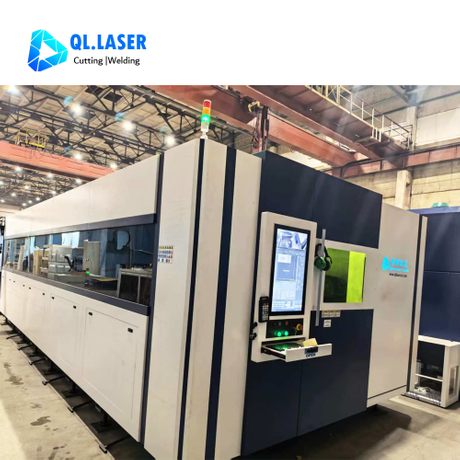
Are manual material handling tasks slowing down your high-speed laser cutter? Walk onto any traditional fabrication floor. You will likely hear the hum of machinery constantly interrupted. Forklifts clank. Operators shout to coordinate heavy lifts. High labor costs, frequent material damage, and severe safety hazards consistently eat into profit margins. Even the fastest modern cutting machines lose their competitive edge if the feeding and part sorting processes remain stubbornly manual.
In this comprehensive engineering guide, you will discover how upgrading to a fully integrated production line definitively resolves these bottlenecks. We will explore the interconnected ecosystem of storage, loading, and sorting mechanisms. These systems transform a fragmented workshop into a continuous manufacturing powerhouse.
Key Takeaways
Seamless Integration: A modern automation cell combines storage, loading, processing, and sorting into one continuous manufacturing cycle.
Smart Storage: Utilizing automated vertical towers maximizes floor space. It ensures the correct material is always queued and ready for production without delay.
Efficient Feeding: Automated loading mechanisms eliminate manual lifting. They prevent material surface scratches and drastically reduce machine idle time between cuts.
Automated Unloading: Dedicated sorting systems prevent frustrating bottlenecks at the end of the line. They accurately separate finished parts from jagged scrap skeletons.
High ROI: Investing in a fully automated cell reduces labor dependency. It improves workplace safety and creates the solid foundation required for profitable unattended operation.
Industry Trends: The Shift Toward Flexible Manufacturing Systems
Recent global manufacturing data highlights a harsh reality. The skilled labor pool is shrinking rapidly. Meanwhile, supply chain demands require tighter tolerances and faster turnarounds. We are seeing a massive industry pivot. Fabricators are abandoning standalone cutting stations in favor of comprehensive Industry 4.0 setups.
The focus has shifted from simply cutting faster to maximizing spindle uptime through integrated material handling. Market trends indicate that forward-thinking buyers are investing in comprehensive automation cells. They need to guarantee predictable high-volume output. An automation cell is not merely a cutting machine. It is a comprehensive interconnected ecosystem designed to handle the entire material flow without human intervention. Upgrading to an integrated line enables true lights-out manufacturing. This addresses the critical need for higher throughput and strict quality control.
Phase 1: Organizing Raw Materials with a Sheet Storage Library
Efficient manufacturing processes begin long before the laser actually fires. A disorganized warehouse is one of the leading hidden causes of machine downtime. Picture an operator spending twenty minutes hunting down a specific gauge of polished stainless steel hidden behind stacks of mild steel. While they search, the laser sits idle. This destroys the facility Overall Equipment Effectiveness. Establishing a structured material foundation is absolutely critical.
Comparing Sheet Metal Racking Systems
Facilities typically choose between two main categories of storage solutions. This choice depends heavily on production volume, material mix, and available floor space. To make an informed engineering decision, consider the core differences outlined below.
| Specification | Automated Vertical Tower | Traditional Roll-Out Racks |
| Footprint Efficiency | Extremely high. Utilizes vertical ceiling space. | Low. Requires massive horizontal floor space. |
| Material Retrieval Time | Under 60 seconds via software command. | 10 to 15 minutes requiring forklift operation. |
| System Integration | Seamlessly connects to laser cutting cells. | Completely isolated from production data. |
| Best Suited For | Medium to large high-volume automated facilities. | Small job shops with low production volume. |
Implementing a centralized Sheet Storage Library offers profound operational advantages. On a practical level, it provides a real-time highly accurate inventory overview. When synchronized with a facility Enterprise Resource Planning system, managers can track material usage down to the exact sheet. Additionally, it protects sensitive materials like mirror-finished aluminum from environmental dust and accidental forklift collisions.
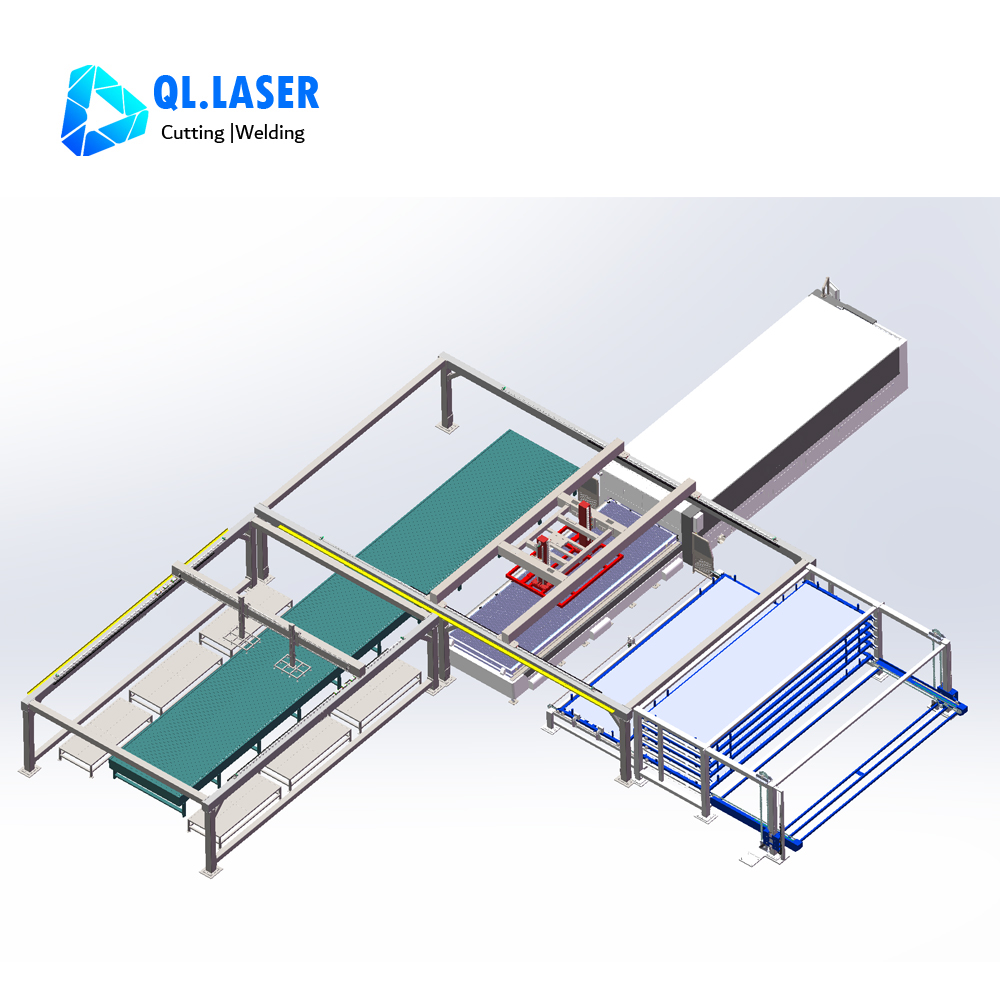
Phase 2: Feeding the Machine via the Automatic Sheet Loading System
Once the raw material is organized and retrieved from the vertical library, it must be swiftly transferred to the cutting bed. This specific transition is where many traditional setups experience severe crippling bottlenecks. Bridging the gap between storage and processing efficiently requires highly specialized handling equipment.
Mechanical Principles of Automated Feeding
An industrial-grade Automatic Sheet Loading System relies on precise mechanical and pneumatic engineering. The system typically utilizes a robust gantry equipped with heavy-duty vacuum suction cups. Advanced systems feature multi-zone vacuum controls capable of lifting payloads ranging from 1000kg to over 3000kg safely and smoothly. These cups create a secure airtight seal on the surface of the raw metal sheet.
A critical engineering challenge in automated loading is double-sheet detection. Thin metal sheets often stick together due to residual mill oil or a vacuum effect. Loading two sheets at once will catastrophically crash the laser cutting head. To prevent this disaster, the loading system employs highly sensitive sheet thickness measurement sensors. It uses a sheet separation process involving fanning magnets for ferrous metals. For non-ferrous metals, it utilizes targeted compressed air blasts. This forces the sheets apart, guaranteeing only a single piece of metal is picked up at a time.
Eliminating Production Bottlenecks
The efficiency gains of an automated loader are staggering. Imagine a traditional setup. It often takes a forklift driver and two spotters up to ten minutes to safely retrieve, transport, align, and load a single sheet of metal. An automated loading system completes this exact flawless cycle in less than sixty seconds.
Beyond sheer speed, the safety benefits cannot be overstated. Manual handling of large sharp sheet metal poses significant daily risks of severe lacerations and long-term ergonomic back strain. Automated feeding eliminates these hazards entirely. It creates a vastly safer working environment while protecting the pristine material from scratches caused by manual dragging.
Phase 3: The Heart of the Operation: The Laser Cutting System
With the material successfully and safely loaded, the fabrication process enters the active processing phase. Because the material feeding is entirely automated, the laser cutter can finally operate at its absolute maximum potential without waiting for human intervention.
Pallet Changers and Exchange Tables
To maximize throughput, automated systems utilize dual-table configurations commonly known as exchange tables. This system works in perfect synchronized tandem with the loading mechanism. While sparks fly inside the enclosed cabin as a 12kW to 30kW fiber laser actively cuts a sheet on the internal table, the loading system is already placing the next raw sheet onto the external table. Once the cutting cycle finishes, high-speed servo motors swap the tables in approximately 15 seconds. This parallel processing ensures the cutting head is almost constantly emitting light.
Intelligent Cutting Features
Automation naturally extends beyond material handling into the cutting process itself. Modern integrated systems feature intelligent cutting technologies. Automatic nozzle changers replace worn consumables without operator input. Auto-focus cutting heads dynamically adjust to different material thicknesses on the fly. Real-time process monitoring uses high-speed cameras to detect cut failures. The system instantly pauses the machine or adjusts parameters to prevent material waste during unattended night shifts.
Phase 4: Clearing the Bed with a Laser Cutting Sorting System
A high-power fiber laser processing a nest of thin-gauge carbon steel creates a massive downstream bottleneck. The machine cuts faster than operators can clear the bed. If operators must manually hammer out parts and wrestle the sharp heavy scrap skeleton off the slats, the unloading process can take hours. That speed advantage instantly evaporates.
Mechanics of Automated Sorting
A dedicated Laser Cutting Sorting System resolves this frustrating end-of-line bottleneck. Depending on the specific system design, automated unloading forks or programmable vacuum grippers descend onto the exchange table.
For full-sheet unloading, heavy-duty forks slide smoothly underneath the cut sheet. They transfer the entire nest to a designated unloading station. For more advanced part-by-part sorting, intelligent vacuum grippers pick up individual finished parts directly from the cutting bed. Because the system software knows the exact coordinates and geometry of every single cut part, the grippers separate the valuable components from the scrap skeleton with pinpoint precision.
Smart Stacking and Palletizing
Advanced sorting systems do much more than merely remove parts. They intelligently organize them for the next stage of manufacturing. The software sorts parts based on their upcoming production routing. All parts destined for the press brake are stacked neatly on one specific pallet. Parts requiring immediate welding are stacked on another. Automated Guided Vehicles frequently integrate with the sorting system to transport the sorted pallets. Meanwhile, the remaining scrap skeleton is automatically deposited into a designated scrap bin for recycling.
Selection Criteria: Choosing the Right Automated Line
Investing in an automated sheet metal line is a massive capital expenditure. Facility managers and engineering teams must carefully assess their specific production bottlenecks. Over-engineering can be costly. Under-engineering leaves bottlenecks unresolved. Use these practical criteria to guide your selection.
Material Volume and Mix: Assess your production style. If your facility runs high-mix custom varied jobs, you desperately need versatile storage libraries with multiple cassette types for rapid material changeovers. If you run low-mix repetitive mass production, a simple high-capacity bulk loader is often sufficient.
Footprint and Layout: Evaluate the available ceiling height and floor space. Vertical automated towers require specific ceiling clearances and thick concrete foundations. However, they save massive amounts of horizontal floor space compared to sprawling traditional racks.
Software Compatibility: Hardware is useless without intelligent control. Determine if the automation software can integrate seamlessly with your existing Enterprise Resource Planning systems. This connectivity prevents data silos and allows for fully automated job scheduling.
Scalability: Industrial manufacturing demands long-term strategic vision. Consider future growth. Modular systems allow you to install one loader now and easily expand the storage tower or add sorting modules later without ripping out the entire line.
The ROI of an Automated Sheet Metal Cell
Justifying the heavy capital expenditure of a fully automated line requires a crystal-clear understanding of the Return on Investment. While the upfront cost is undeniably higher than purchasing a standalone machine, the financial payback is achieved rapidly through multiple compounding operational efficiencies.
Labor Reallocation and Increased Utilization
Automation does not simply eliminate labor. It fundamentally optimizes it. By implementing automated loading and sorting, highly skilled workers are freed from physically demanding low-value tasks. These employees can be immediately reallocated to higher-value roles such as machine programming and quality control. This effectively skyrockets the overall output per employee.
Consequently, machine utilization rates see a drastic measurable improvement. Industry data proves that standalone manually loaded laser cutters typically operate at a dismal 40 percent utilization rate due to constant handling downtime. In sharp contrast, a fully automated cell can easily achieve an 85 percent to 95 percent utilization rate. Doubling your active cutting time significantly shortens the payback period of the equipment.
Lights-Out Manufacturing
The ultimate financial holy grail of automation is the capability for lights-out manufacturing. By relying entirely on the storage library to supply material and the sorting system to organize output, the laser cutter can run completely unattended overnight. This effectively doubles a factory production capacity without the nightmare of hiring second-shift personnel. It drives down the cost-per-part dramatically.
Conclusion
The journey of a simple sheet of metal through an automated cell represents the absolute pinnacle of modern manufacturing efficiency. Starting securely in the vertical storage library, the material is seamlessly retrieved and transferred by the automated loading system. It is then processed at blinding speeds by the laser cutter. Finally, the finished parts are meticulously organized and stacked by the sorting system.
In today highly competitive industrial landscape, relying on manual material handling is a critical vulnerability. Integrating these automated systems has transitioned from being a luxury to a fundamental necessity for survival and scalability. If your facility is choking on production bottlenecks, it is time to evaluate an automation upgrade. Ready to eliminate material handling bottlenecks? Explore the comprehensive range of solutions at QL Laser. Whether you need a standalone high-power cutter or a fully integrated sheet metal laser cutting machine with automatic loading, unloading, storage, and sorting systems, our engineering team can design the perfect cell for your floor. Visit qllasercut.com to request a custom ROI analysis today.
FAQ
What is the difference between a standalone laser cutter and an automated cutting system?
A standalone machine relies entirely on operators to manually load raw sheets and unload finished parts. This creates severe production bottlenecks and constant machine downtime. An automatic system physically integrates material storage, automated feeding mechanisms, and part sorting into a single closed-loop cell. This powerful integration allows the laser to operate continuously to maximize throughput.
Can an automated loading system handle different types and thicknesses of metal?
Yes. Modern automated loading systems are engineered to be highly versatile. They utilize advanced vacuum lifting technology equipped with multiple suction zones that can be selectively activated based on specific sheet dimensions. Integrated thickness sensors and magnetic fanning separators ensure the system automatically adjusts to handle carbon steel, stainless steel, and aluminum across vastly different gauges.
How much space does an automated storage library require?
The exact footprint depends on the required storage capacity. Automated storage libraries are specifically designed to optimize factory space. By utilizing vertical automated towers rather than sprawling horizontal cantilever racks, these systems maximize the use of available facility height. Transitioning to a vertical storage library actually reduces the total warehouse square footage required for raw materials.
Does the sorting system automatically separate scrap from finished parts?
Yes. Advanced sorting systems completely eliminate the need for manual part punching. They utilize intelligent robotic grippers or specialized vacuum arrays to individually pick up finished parts directly from the cutting bed. They stack them onto designated pallets based on the production routing. The system then disposes of the remaining jagged metal skeleton into a dedicated scrap bin.
Can I retrofit my existing laser cutter with an automation cell?
In many industrial scenarios, retrofitting is highly feasible. Modular automation components such as automated loaders and storage towers can often be integrated with existing laser cutting machines. Successful retrofitting requires strict compatibility checks regarding the machine control software and the design of the exchange tables. A comprehensive engineering assessment is always necessary.
What is the typical payback period for a fully automated sheet metal cell?
The payback period varies based on production volume and labor rates. However, most high-volume fabrication shops see a full return on investment within 18 to 36 months. This rapid payback is driven by the transition from a 40 percent machine utilization rate to over 85 percent, combined with the drastic reduction in material handling labor costs and scrap reduction.
How does the sorting system handle micro-joints left in the cut sheet?
When parts are nested with micro-joints to prevent tipping during the cutting process, standard vacuum grippers may struggle to pull them free. Advanced automated sorting systems utilize a combination of downward pneumatic pressure pins and upward vacuum lifting force to snap the micro-joints cleanly. For thicker materials, the cutting software is optimized to leave micro-joints only in non-critical areas, allowing the automated unloading forks to remove the entire sheet for offline separation if necessary.