Metal fabrication shops and production managers often face a critical dilemma when scaling their operations. They must carefully balance upfront capital expenditure against achieving maximum daily throughput. A poorly matched machine can quickly become a production bottleneck and disrupt an entire factory floor. Choosing between a single table and an exchange table directly dictates workflow efficiency, facility footprint, and operator utilization. One setup offers lean simplicity, while the other provides relentless, continuous processing power. Finding the optimal configuration ensures your operations remain highly competitive and consistently profitable.
This guide provides an evidence-based comparison of both architectures. We explore mechanical differences, real-world cycle times, and strict spatial requirements in detail. These insights will help buyers move past marketing claims and make a confident, data-backed procurement decision.
Key Takeaways
Single Table: Lower initial investment and smaller footprint; ideal for custom fabrication, prototyping, or facilities with strict space constraints.
Exchange Table: Drastically reduces machine idle time by enabling simultaneous cutting and loading; mandatory for high-volume production and continuous batch runs.
ROI Metric: The decision hinges on the "beam-on" time ratio—if material handling takes up more than 30% of your current cycle time, an exchange table typically justifies its higher cost.
Scalability: Exchange tables serve as a foundational step toward fully automatic loading laser cutter systems.
Understanding the Core Architectures
The Single Table Fiber Laser Cutter
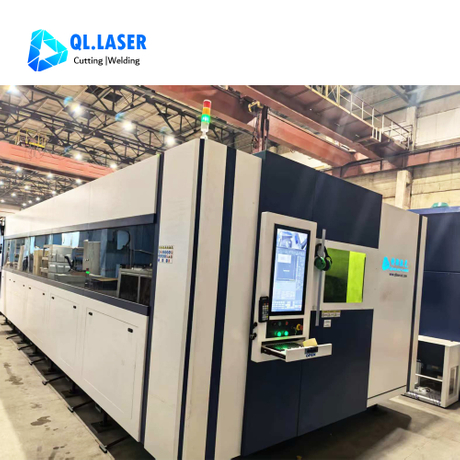
A single table machine relies on a highly straightforward mechanical design. It features one stationary cutting bed positioned directly under the moving laser gantry. The laser must stop entirely while the operator interacts with the machine. Workers must open the safety doors, unload the newly cut parts, and drag away the scrap skeleton. Afterward, they must load a completely new sheet of raw material before pressing start again. This stop-and-go process creates unavoidable periods of absolute machine silence.
The single table fiber laser cutter excels in job shops handling low-volume, high-mix orders. In these specific environments, setup time varies wildly between different jobs. An operator might cut thin aluminum brackets for an hour and then switch to heavy steel base plates. The inherent loading downtime matters much less here. Operators typically use these pauses to adjust fixtures, check tolerances, or reprogram the controller for the next custom file.
The Exchange Table Fiber Laser Cutter (Shuttle Table)
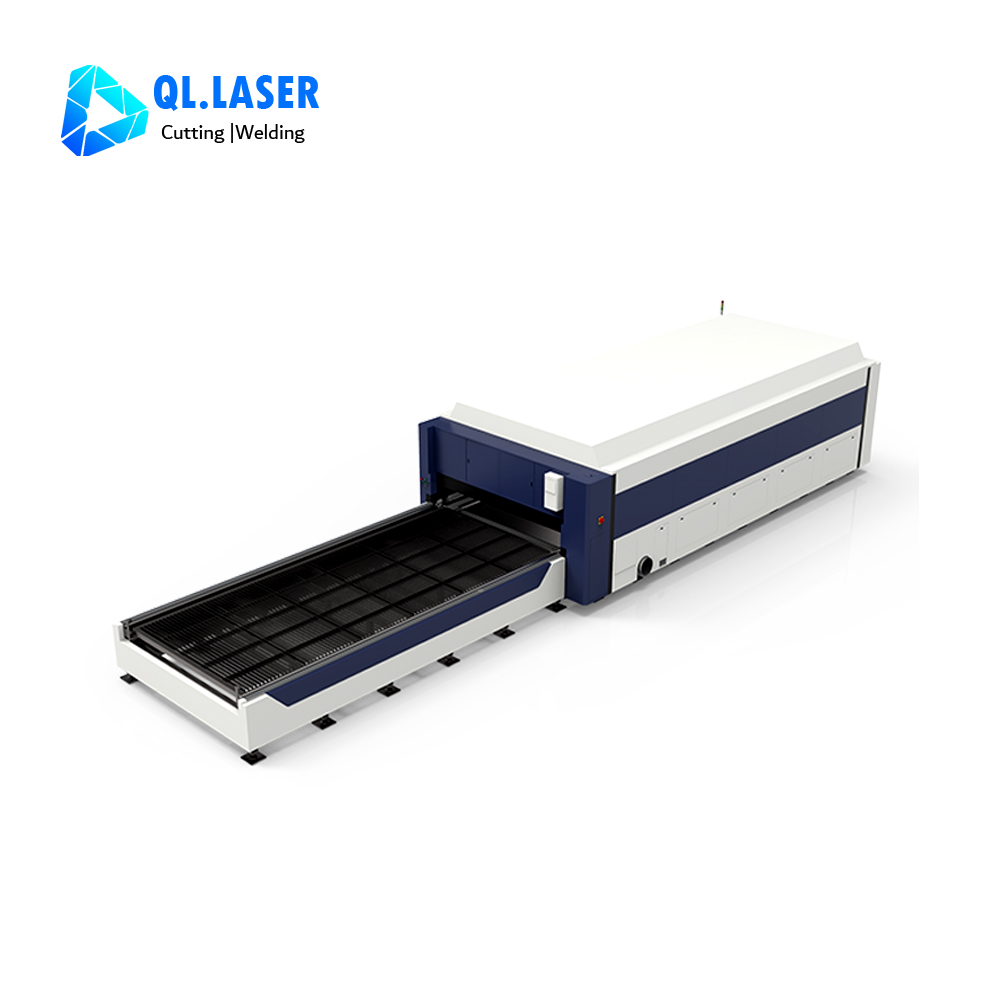
The exchange table architecture fundamentally changes the rhythm of a production floor. It features two separate, moving pallets. We frequently refer to this dual-pallet setup as a shuttle table laser cutting machine. While the laser cuts rapidly on pallet A inside the protective enclosure, pallet B rests completely outside the cutting zone. The operator safely unloads finished parts and reloads fresh material onto pallet B simultaneously. Once pallet A finishes, heavy-duty chains or rack-and-pinion drives instantly swap the two tables.
This configuration thrives in dedicated industrial fiber laser cutter environments requiring continuous, uninterrupted operation. By keeping the laser beam active almost constantly, fabricators maximize their operational efficiency. The laser rarely waits for a human operator, making it a powerhouse for large-scale manufacturing workflows.
Productivity and Throughput Analysis
To truly understand the value of these machines, we must evaluate them through the lens of strict time studies. The differences in productivity become glaringly obvious when you measure an entire eight-hour shift.
Cycle Time Comparison
First, we must detail the "hidden cost" of single tables. Many buyers purchase incredibly fast, high-wattage lasers but neglect to measure material handling. A single table setup routinely suffers 2 to 5 minutes of total downtime per sheet for manual loading and unloading. If a machine cuts a thin sheet in just two minutes, but the operator takes four minutes to reload, the laser sits idle for most of the shift.
Alternatively, a shuttle system overlaps handling time with cutting time. It limits downtime exclusively to the 10 to 20 seconds it takes for the tables to physically swap places. This minor interruption is the only time the machine stops producing parts.
Batch Metal Cutting Efficiency
Exchange tables transform a standard piece of equipment into a true batch metal cutting machine. When cutting hundreds of identical components, overlapping the load and unload cycles creates massive gains. Facilities report increasing daily part output by 30% to 50% simply by eliminating manual pauses. This increase depends heavily on sheet thickness and part complexity. Thinner materials cut faster, meaning the rapid table swap provides an even larger relative advantage.
Operator Utilization
Machine efficiency goes hand-in-hand with labor efficiency. Single tables force operators into a frustrating stop-and-go workflow. They watch the machine work, then rush to swap materials, then watch again. Conversely, dual tables allow operators to work systematically. While the machine cuts, operators complete secondary tasks.
A standard workflow for an operator running an exchange table includes:
Loading a fresh, raw metal sheet onto the external pallet.
Inspecting the quality and edge finish of recently cut parts.
Deburring sharp edges or kitting parts for the welding department.
Staging the next raw sheet via jib crane while waiting for the current cycle to end.
Cost vs. ROI: Evaluating the Financial Impact
Upgrading your cutting capacity requires serious financial analysis. You must look closely at upfront costs, maintenance realities, and the math required to break even.
Initial Capital Expenditure (CapEx)
Buyers should approach quotes with realistic expectations. Exchange tables generally cost 15% to 30% more upfront than their single table counterparts. This price premium covers several heavy-duty mechanical additions. Manufacturers must install robust drive tracks, additional high-torque motors, and advanced safety barriers. Furthermore, the machine frame requires significant structural reinforcement to handle the shifting weight of two heavily loaded pallets.
Operating Expenses (OpEx) & Maintenance
Single tables maintain a clear advantage regarding mechanical simplicity. Fewer moving parts mean slightly lower routine maintenance costs. Mechanics enjoy a simpler troubleshooting process when a breakdown occurs.
The exchange table reality is quite different. It requires strict, routine track maintenance. Operators must keep rails entirely free of slag and metallic dust to prevent jamming. Mechanics must perform routine sensor calibration to ensure the pallets align perfectly during every swap. However, the machine aggressively offsets these added maintenance costs via higher billable machine hours.
Financial Variable Comparison
| Financial Factor | Single Table | Exchange Table |
| Initial CapEx | Lower baseline cost | 15% - 30% premium |
| Mechanical Complexity | Low (stationary bed) | High (motors, tracks, sensors) |
| Billable Machine Hours | Limited by manual handling | Maximized (continuous cutting) |
| Maintenance Burden | Minimal | Requires track cleaning and sensor checks |
Calculating the Break-Even Point
Instruct buyers to explicitly calculate their average sheet processing time versus loading time. You simply divide the daily cutting hours by the daily loading hours. If the cutting time per sheet is extremely fast, an exchange table pays for itself much faster. The higher the volume of parts, the quicker the return on the initial capital expenditure.
Facility Footprint and Implementation Realities
Even if the financial math makes perfect sense, physical space constraints often dictate the final procurement decision. Installing heavy industrial machinery requires careful facility planning.
Floor Space Requirements
State clearly that exchange tables demand a massive footprint. They require roughly double the overall length of a single table machine. You must accommodate the extended pallet track and the safety barriers protruding into the shop floor. Facilities with tight aisles or cramped equipment layouts often struggle to house these larger systems.
Safety and Enclosures
Modern exchange table systems do not operate out in the open. They come heavily equipped with full protective enclosures. They feature sophisticated safety light curtains around the loading zone. These strict safety measures are absolutely necessary for CE and FDA compliance in high-traffic industrial environments. The enclosure prevents toxic fumes from escaping and protects nearby workers from dangerous laser reflections.
Material Flow and Logistics
Purchasing a fast machine is useless if you cannot feed it raw material quickly enough. You must discuss forklift access and jib crane placement before finalizing a purchase. Exchange tables require highly optimized shop floor layouts. You must ensure raw material can be continuously fed to the external loading zone without creating a bottleneck. Deciding on a single table vs exchange table laser cutting machine requires a close, honest look at your available square footage and aisle widths.
Decision Framework: Which Machine Fits Your Shop?
Choosing the right architecture requires you to match machine capabilities with your actual daily workflow. Use this framework to finalize your choice.
Choose a Single Table Fiber Laser Cutter if:
You run a startup, a custom job shop, or an educational training facility.
Your available factory floor space is severely limited.
You primarily process thick plates that take 30+ minutes to cut, making a 5-minute loading time statistically insignificant to your daily output.
Choose an Exchange Table Fiber Laser Cutter if:
You operate a high-production facility running aggressive, multi-shift schedules.
You frequently cut thin-to-medium gauge sheet metal where cutting cycles finish in just a few minutes.
You plan to eventually integrate an automatic loading laser cutter or a large material tower storage system to future-proof your production.
Conclusion
The choice between these two structural architectures is not about determining which is universally superior. Rather, it is about identifying which machine directly aligns with a facility's specific cycle times, operational goals, and space constraints. A single table provides accessible, lean cutting power. Meanwhile, dual pallets unlock relentless, high-volume production for growing factories.
Before requesting a final quote, take a proactive step. Encourage your engineering team to request a formal time study from the equipment manufacturer. Send a typical CAD file and ask the vendor to calculate the total cycle times—including both cutting and manual loading—on both machine types. This simple exercise provides the exact data you need to make the smartest purchasing decision.
FAQ
Q: Can I upgrade a single table to an exchange table later?
A: Upgrading is rarely cost-effective or structurally feasible. A single bed machine lacks the foundational frame, motors, and integrated software required for dual-pallet movement. It is highly recommended to purchase the exact architecture you will need 3 to 5 years from now.
Q: How long does the actual table exchange process take?
A: The swap typically takes between 10 to 25 seconds. The exact duration depends heavily on the machine's overall size, the power of its drive system, and the specific safety protocols programmed into the light curtains.
Q: Does an exchange table require a dedicated operator?
A: Yes. To maximize throughput, an operator must be present to clear finished parts and load the external pallet while the machine is actively cutting. Alternatively, you can install an automated sheet loader to handle this task.