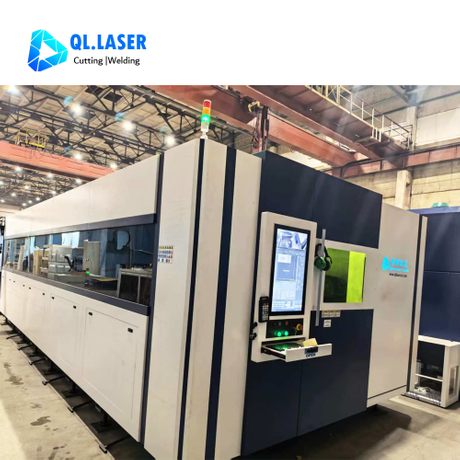
In the highly competitive world of metal fabrication, material costs dictate profit margins. Walk the floor of any busy job shop. You will likely see bins overflowing with discarded pipe ends. For years, manufacturers relying on traditional tube cutting methods accepted this tailing waste as an unavoidable expense. However, global material prices fluctuate wildly. Clients now demand tighter tolerances. Leaving inches of uncut pipe at the end of every production run is simply no longer sustainable.
Enter the three-chuck tube laser cutter. This revolutionary equipment maximizes material utilization and streamlines factory production. In this guide, we explore how upgrading to an advanced three-chuck architecture eliminates tailing waste. We will look at improved cutting accuracy and bottom-line transformation. Whether you struggle with excessive scrap, surface scratches on delicate materials, or processing irregular flat tubes, this breakdown covers the essential engineering facts before your next investment.
Key Takeaways
Maximize Material Utilization: Discover how a three-chuck system virtually eliminates tailing waste, saving substantial raw material costs annually.
Unmatched Stability: Learn how the three-point clamping system prevents tube sagging and vibrations, ensuring pristine cuts even on long or heavy pipes.
Automation is Key: Understand the synergy between a modern chuck setup and automated loading for continuous, hands-free production.
Versatility in Application: See how this technology easily handles standard round pipes, square tubes, and notoriously difficult flat or irregular profiles without leaving surface scratches.
Higher ROI: Compare high-end systems against simple two-chuck machines to see why the initial investment pays off rapidly through reduced waste and higher output.
The Hidden Cost of Pipe Waste in Metal Fabrication
Walk onto any traditional fabrication floor. The metallic clank of discarded pipe ends hitting the scrap bin is a familiar sound. Material efficiency directly correlates with operational profitability. This loss manifests primarily as tailing waste. It is the unprocessable end section of a pipe discarded or recycled at a fraction of its purchasing value.
Standard two-chuck tube cutting machines operate with a basic front and rear mechanism. During cutting, the rear chuck must maintain a firm grip to feed the material forward. To prevent the delicate laser cutting head from colliding with bulky mechanical components, the machine requires a built-in safety buffer. Engineers call this the dead zone. Depending on chuck jaw dimensions, this dead zone results in 100mm to 400mm of uncut waste per pipe.
While a few inches of scrap might seem negligible, the cumulative financial impact is staggering. Consider a facility processing 500 pipes daily. Losing an average of 200mm per pipe equates to 100 meters of wasted material every single day. Over a standard working year, this translates to tens of thousands of meters of premium metal discarded as scrap. Beyond raw material costs, secondary operational inefficiencies drain resources. Operators spend costly labor hours extracting, sorting, and transporting heavy tailings. Addressing this systemic waste requires a fundamental shift in machine kinematics.
What is a Three-Chuck Tube Laser Cutting Machine?
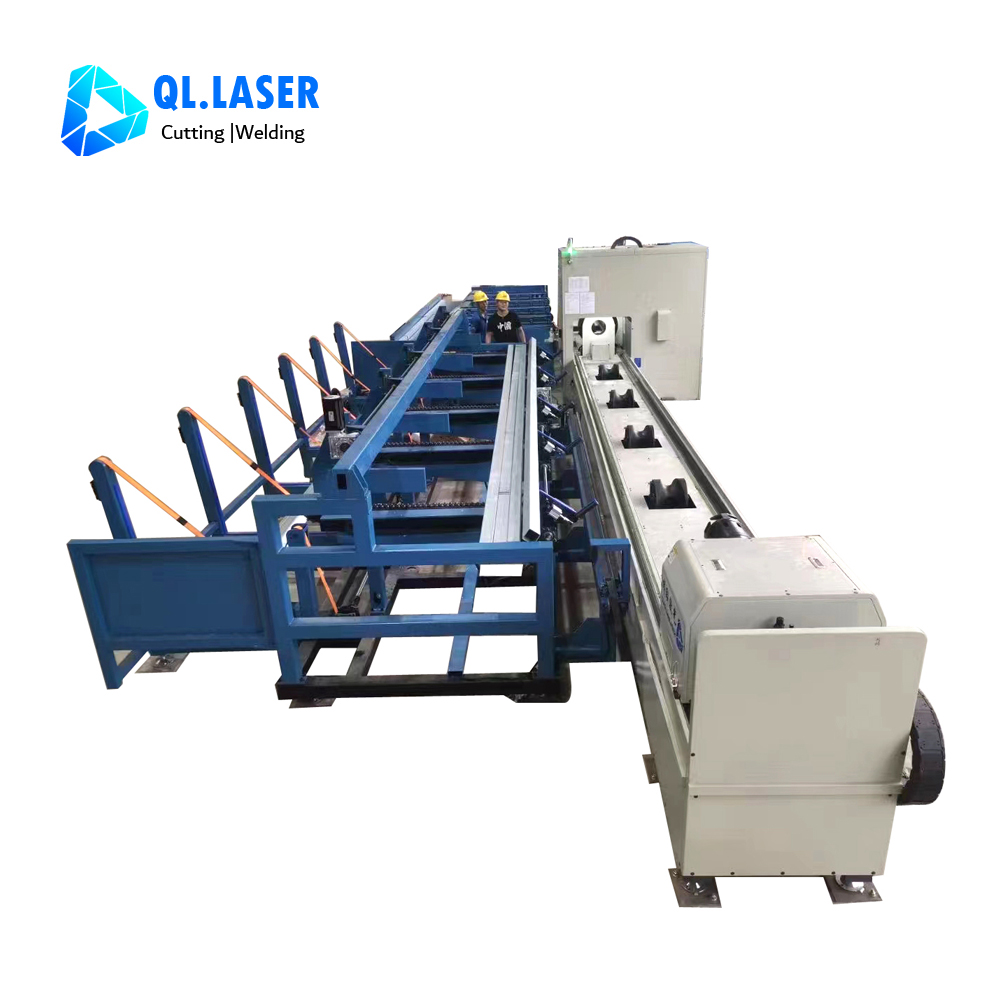
To resolve the inherent limitations of older equipment, engineers developed advanced kinematic systems. These systems support and feed material through the entire cutting cycle without interruption. The modern three-chuck architecture represents a significant mechanical leap. It maximizes material yield and maintains structural stability over extremely long pipe lengths.
Unlike basic models, this machinery utilizes three independent, synchronized rotary chucks. The front, middle, and rear components work in a highly coordinated tandem. The front and middle chucks provide primary central support and rotation. They ensure the pipe remains perfectly aligned under the laser head. Meanwhile, the rear chuck acts as the primary feeding mechanism. As the pipe is consumed, the middle chuck momentarily releases its grip. This allows the rear chuck to pass through or closely approach the cutting zone. The traditional dead zone is completely bypassed.
This mechanical synergy is exactly what enables Zero-Tailing Tube Cutting. The process relies on a precise handover sequence. When the cutting sequence reaches the final segment, the middle and front chucks secure the material. The rear chuck then pushes the extreme end of the pipe directly past the laser cutting head. Fully supported from the front and middle, the laser cuts right up to the final millimeters. Waste is typically reduced to between 0mm and 20mm.
Top Benefits of Upgrading to a Three-Chuck System
Investing in advanced fabrication equipment demands tangible operational improvements. Transitioning to a three-chuck architecture offers distinct advantages impacting product quality and efficiency.
The most immediate benefit is a drastic reduction in material waste. Converting former scrap into sellable products significantly lowers raw material purchasing requirements. For facilities processing high-value metals, waste reduction savings often offset operational costs within the first few quarters.
Long pipes measuring 6 to 8 meters are highly prone to sagging under their own weight. In standard machines, this sagging causes a violent whipping effect at high rotational speeds. The result is inaccurate cuts and out-of-tolerance parts. The addition of a middle chuck provides critical central support. It neutralizes vibrations and maintains absolute concentricity. Unwavering stability ensures Precision Tube Laser Cutting across the entire length. High-end models achieve positioning accuracies of ±0.03mm. Consequently, the machine easily processes complex profiles like square tubes and notoriously difficult flat tubes that warp in lesser machines.
Furthermore, surface quality remains a major concern for architectural or medical component manufacturers. Traditional feeding mechanisms drag pipes across stationary metal supports. This causes deep gouges requiring expensive secondary polishing. Three-chuck systems utilize synchronized chuck rotation paired with active roller supports. As the pipe moves, the supports roll with it. Friction is entirely eliminated, preserving the pristine surface finish of the raw material.
High-End 3-Chuck vs. Simple Tube Cutting Machines: A Comparative Analysis
Production managers must carefully weigh initial procurement costs against long-term performance metrics. Comparing a high-end three-chuck system to a standard two-chuck machine highlights why modern fabricators upgrade their factory floors.
A two-point support system is inherently limited when handling heavy or flexible materials. The unsupported span allows micro-movements during cutting. In stark contrast, a three-point support system guarantees rigid stability. The laser maintains exact focal lengths and achieves tighter tolerances regardless of pipe weight.
| Technical Feature | Standard 2-Chuck Machine | Advanced 3-Chuck Machine |
| Clamping Support | 2-point support. Prone to severe sagging on tubes over 3 meters. | 3-point dynamic support. Eliminates whipping and sagging entirely. |
| Tailing Waste | High waste. Averages 100mm to 400mm per pipe. | Near-Zero waste. Consistently achieves 0mm to 20mm per pipe. |
| Max Acceleration & Precision | Lower speeds. Positioning accuracy around ±0.05mm. | Up to 1.5G acceleration. Positioning accuracy reaches ±0.03mm. |
| Complex Profile Handling | Moderate. Struggles with heavy rectangular or flat tubes. | Excellent. Dynamic clamping prevents geometric distortion. |
Upgrading to a comprehensive three-chuck setup requires a larger initial capital expenditure. However, return on investment calculations must factor in continuous material savings and reduced scrap rates. Facilities operating multiple shifts often find the advanced machine pays for the price difference within the first 12 to 18 months purely through increased daily throughput.
Maximizing Efficiency with an Automatic Tube Loading System
While the advanced chuck mechanism optimizes the cutting process, overall efficiency depends heavily on material feeding speeds. Modern automation acts as a critical multiplier of factory productivity.
Integrating an Automatic Tube Loading System creates a seamless production loop. Operators no longer wrestle with heavy 6-meter steel profiles one at a time. Instead, entire bundles of raw tubes are placed into a loading magazine. The automated system intelligently separates, measures, and feeds the pipes directly into the rear chuck without human intervention.
Manual loading creates severe bottlenecks. It is physically demanding and prone to error. Misalignment during manual loading causes catastrophic machine collisions. Automation mitigates these risks entirely. By removing the heavy lifting, facility managers can reallocate labor. Operators oversee multiple automated work cells simultaneously and focus on strict quality control.
Industry Trends: The Shift Towards Sustainable and Automated Tube Fabrication
Looking at the broader manufacturing landscape, the shift towards three-chuck technology is driven by converging industry trends. Supply chain volatility and the push for green manufacturing are reshaping shop floors globally. As metal prices experience unprecedented fluctuations, fabricators cannot treat raw material as an infinite resource. Maximizing yield from every single purchased tube has transitioned from a simple efficiency metric to a core survival strategy.
Simultaneously, the industry is moving rapidly toward smart factory environments. Clients demand tighter turnaround times and flawless precision. Manual or outdated machinery simply cannot consistently deliver these results. By integrating advanced laser cutting kinematics into their workflow, forward-thinking manufacturers future-proof their operations. They reduce their carbon footprint by minimizing scrap waste. They also leverage automation to combat the growing shortage of skilled manual labor in the fabrication sector.
Overcoming Common Tube Cutting Challenges
Metal fabrication presents unique physical challenges. A high-quality three-chuck system is engineered to address these operational hurdles directly.
Handling flat and highly irregular tubes creates severe production bottlenecks. In standard machines, asymmetric weight distribution causes the tube to slip or warp inside the chuck jaws. A three-chuck system overcomes this through a dynamic gripping technique. Distributing the clamping force evenly across three distinct points maintains perfect center alignment. The laser executes complex geometric cuts on flat tubes without dimensional distortion.
Thermal distortion and hanging slag are frequent issues when cutting thick-walled pipes. Achieving a flawless cut demands advanced laser control. Modern systems utilize automatic focus laser heads that adjust the focal point on the fly. You can hear the assist gas adjusting as it moves over different thicknesses. Coupled with precise gas management, the machine ensures clean edges requiring absolutely no secondary deburring. Operators simply switch between oxygen for carbon steel and nitrogen for stainless steel to achieve optimal results.
Operator knowledge remains vital. Maximizing equipment potential requires foundational skills like performing regular pneumatic maintenance to prevent dust ingress. Proper parameter settings and optimized nesting software extend machine lifespan.
How to Choose the Right Equipment
Selecting appropriate equipment requires a rigorous evaluation of production needs. Not all three-chuck systems share the exact same specifications. Making an informed decision involves assessing critical technical parameters.
Start by checking typical material wall thickness. This dictates your laser power needs. A 1500W to 3000W source is perfectly sufficient for thin-walled furniture tubes. Structural steel fabricators processing heavy pipes require robust 6000W power sources to maintain efficient cutting speeds.
The foundation of any high-precision cutter is the machine bed. Look for heavy-duty welded machine beds that have undergone extensive thermal stress relief. A highly rigid bed absorbs the high-speed kinetic energy of moving chucks. For instance, machines capable of 1.5G acceleration need immense structural integrity to prevent micro-vibrations. Evaluate the chuck stroke to ensure it accommodates your largest pipe diameters and standard 6500mm tube lengths. Electric chucks often provide finer control over clamping force compared to pneumatic options. This finer control is ideal for delicate custom extrusions.
Finally, hardware is only as effective as the software controlling it. Ensure the machine features advanced nesting software supporting three-chuck kinematics. The software must include built-in tailing algorithms and automatic edge searching. Always request a sample cut before finalizing a purchase.
Conclusion
The evolution of tube laser cutting technology has fundamentally changed metal fabrication. Minimizing waste through smart engineering offers superior stability. Three-chuck systems deliver precision that older two-point systems simply cannot match.
While the initial capital investment is higher, achieving zero-tailing cuts translates directly into higher profit margins. Lower raw material costs and automated loading systems increase daily output. This technology yields remarkably quick financial returns. Now is the time to evaluate your material waste and upgrade your factory floor technology.
Ready to eliminate pipe waste and boost your production efficiency? Explore the high-performance 3 Chuck Tube Laser Cutting Machine options at QL Laser to find the perfect fit for your fabrication needs.
Frequently Asked Questions
What is a 3 chuck tube laser cutting machine?
It is an advanced laser cutting system equipped with three independent rotary chucks. The front, middle, and rear chucks work together to securely support, feed, and cut metal pipes. This provides maximum stability and virtually eliminates material waste.
How does zero-tailing tube cutting work?
The process utilizes a synchronized handover. As the laser reaches the end of the pipe, the middle and front chucks hold the material securely. The rear chuck pushes the extreme end past the laser head. The machine cuts right to the edge, leaving almost no uncut scrap.
Can a 3-chuck machine cut flat or irregular tubes?
Yes. The dynamic clamping force and three-point central support make these machines ideal for flat, rectangular, and custom-profile tubes. The multi-point grip prevents slipping and warping.
What is the maximum tube length a 3-chuck laser can handle?
High-end industrial models are typically designed to handle standard raw material lengths of 6000mm to 6500mm. The continuous support from the three chucks ensures that even at maximum length, the tube remains perfectly level without sagging.
How does a 3-chuck system handle heavy tubes compared to standard machines?
Heavy tubes often cause severe whipping and vibration in two-chuck systems. A three-chuck system distributes the massive weight across three rigid points. This prevents kinetic distortion and allows the machine to maintain high acceleration rates and precise positioning accuracies of ±0.03mm.
Is an automatic tube loading system necessary?
While not strictly mandatory, an automatic loader is highly recommended. It drastically reduces manual labor and prevents loading errors. Eliminating machine downtime between cuts makes it essential for high-volume production runs.
Will this machine prevent scratches on stainless steel pipes?
Yes. Advanced chuck designs and synchronized active roller supports move with the pipe. This prevents friction and dragging, ensuring the pristine surface finish required for architectural applications.
What is the typical ROI for upgrading to a 3-chuck system?
Return on investment varies based on production volume. Most high-volume facilities see a full return within 12 to 18 months. This rapid ROI is driven by massive reductions in raw material waste and faster processing speeds.