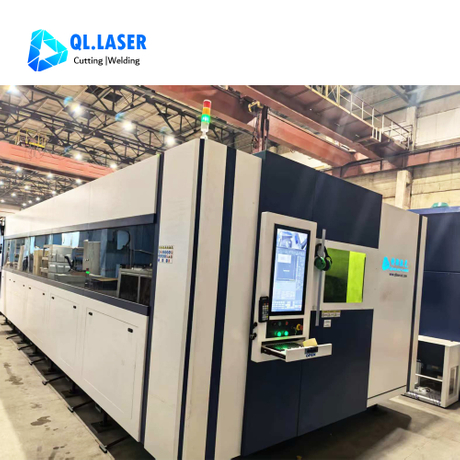
Upgrading to a large format system represents a critical capital decision. It fundamentally alters your facility's workflow, floor plan, and capacity. Small equipment upgrades offer incremental daily gains. In contrast, massive equipment overhauls change how you do business entirely. At a certain production threshold, standard 4x8 or 5x10 laser beds become severe bottlenecks. You find your fabrication shop forced to outsource large components. Alternatively, you waste valuable labor hours on multi-piece welding operations. We see this limitation often in growing job shops. This guide provides a skeptical, evidence-based framework. It helps you determine if bringing a large format gantry laser cutting machine in-house aligns with your actual production volume. We will explore return on investment targets and necessary facility capabilities. You will learn to spot the operational triggers that justify the purchase. We also cover the hidden implementation realities many buyers overlook. Let's analyze whether your current setup is holding you back.
Key Takeaways
The Tipping Point: Justify the investment when outsourcing costs, excessive material scrap from small beds, and secondary welding labor exceed the annualized CapEx and OpEx of a new machine.
Structural Necessity: A gantry design (dual-drive) is non-negotiable for oversized formats to prevent beam sag and maintain micron-level accuracy across long Y-axis travels.
Implementation Reality: The machine's physical footprint is only half the equation; material handling (cranes, automated loading) and foundation stability dictate true operational success.
Secondary Operations: Integrating a beveling head can eliminate downstream weld-prep, dramatically accelerating ROI for heavy plate fabricators.
Identifying the Bottleneck: Are You Outgrowing Your Current Setup?
Many fabrication shops rely on traditional 5x10 laser beds. These work well for standard, everyday jobs. However, they struggle significantly when project scopes expand. You must define specific operational triggers. These signals indicate you finally need an oversized sheet metal cutter. Ignoring these bottlenecks limits your business growth and reduces profit margins.
Trigger 1: Rising Outsourcing Costs for Large Plate Laser Cutting
Document the financial drain caused by outsourcing. Also, document lead-time delays carefully. Relying on third-party service centers hurts your margins. This happens frequently for large plate laser cutting. Parts exceeding three meters require specialized equipment to process. You lose control over quality standards and delivery schedules. Shipping massive steel plates back and forth adds heavy freight costs. Eventually, the monthly outsourcing bills exceed the financing costs of owning the equipment.
Trigger 2: High Scrap Rates & Yield Issues
Standard beds limit nesting software efficiency drastically. Suboptimal material utilization eats directly into your profits. You cannot nest long or awkwardly shaped parts efficiently on small sheets. Oversized plates allow better nesting density overall. You generate far less scrap material per job. Software algorithms can interlock complex shapes much better on a 12-meter canvas. Yield improvements directly boost the bottom line. Less wasted steel means higher profitability per project.
Trigger 3: Secondary Assembly Labor
Cutting large components into smaller sections seems cheap initially. It hides massive downstream production costs. You pay skilled welders to reassemble those small sections later. This multi-piece welding wastes time continuously. It also introduces structural weak points into the final product. Heat distortion from excessive welding requires further straightening labor. Cutting a single large part eliminates these secondary assembly steps completely.
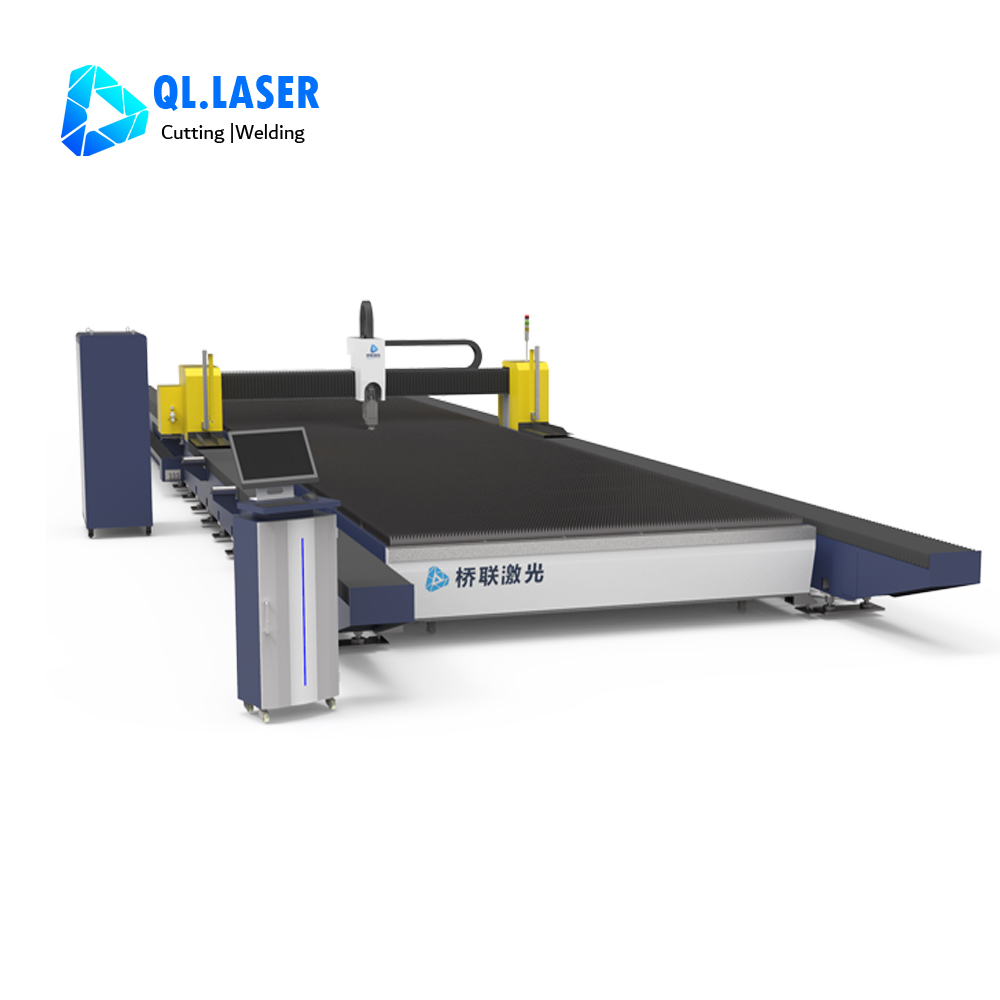
Gantry vs. Cantilever: Why Architecture Matters for Large Formats
Gantry architecture dominates the large format industrial sector. We must evaluate why this solution works best for oversized beds. A cantilever design might save some floor space initially. However, it fails catastrophically over long operational spans.
Rigidity and Vibration Control
Rigidity is absolutely critical for precision cutting. A dual-drive gantry system eliminates the dreaded "whipping" effect. Cantilever systems vibrate significantly over long travel distances. We see this vibration ruin cut quality repeatedly. The gantry bridge provides unmatched structural rigidity across the entire bed. It anchors the cutting head firmly during high-speed directional changes. This stability prevents edge striations on thick materials.
Acceleration and Precision
Acceleration limits dictate your true cycle times. Synchronized dual servo motors drive both sides of the gantry bridge. This specific setup on a gantry fiber laser cutter maintains high dynamic performance. You get excellent cornering accuracy at high speeds. It works perfectly across massive work envelopes. A single-drive system would lag on one side. That lag causes microscopic diagonal skewing over a 12-meter bed.
Thermal Distortion Management
Thermal distortion ruins tight machining tolerances. Prolonged cutting cycles generate immense radiant heat. This heat constantly affects the machine frame during operation. Heavy-duty gantry frames resist thermal deformation effectively. Engineers often use stress-relieved welded steel or cast iron. They maintain their structural geometry under intense heat. This ensures consistent accuracy on thick steel over multiple production shifts.
Core Evaluation Dimensions for a Heavy Duty Laser Cutting Machine
Do not base equipment purchases on theoretical maximums. Match machine specifications to your actual job shop requirements. We use a strict framework for shortlisting features. When evaluating a heavy duty laser cutting machine, focus on outcomes. Ignore flashy marketing materials that do not apply to you.
Laser Power vs. Thick Steel Laser Cutting Reality
Marketing claims often inflate real-world capabilities. You must assess actual pierce times carefully. Evaluate edge quality on 20mm+ carbon steel in person. High-kW fiber lasers cut incredibly fast. However, their electrical and gas operating costs are substantial. Compare these running costs against your actual production volume needs. If you only perform thick steel laser cutting occasionally, a 30kW source wastes capital. Match the power source to your average daily throughput.
Bed Segmentation and Zonal Exhaust
Large cutting beds generate enormous amounts of toxic smoke. Dust extraction efficiency is therefore non-negotiable. You cannot extract air from the entire bed simultaneously. That approach wastes massive amounts of HVAC energy. Instead, large beds require highly partitioned exhaust zones. These zones activate dynamically directly under the moving cutting head. This smart extraction maintains safety and environmental compliance. It keeps facility operating expenses highly manageable.
Value-Add Configurations (Bevel Cutting Machine Integration)
Adding a 3D or 5-axis beveling head transforms your workflow entirely. We strongly recommend assessing this specific upgrade. The ROI of a bevel cutting machine configuration is often staggering. Calculate the labor hours you currently spend on weld preparation. You can cut V, Y, and K bevels directly on the laser. This eliminates secondary manual milling operations. It removes messy plasma prep stages entirely. Your parts go straight from the laser bed to the welding bay.
Table 1: Laser Power Match and Application Guide
| Laser Source Power | Ideal Carbon Steel Thickness | Primary Production Use Case |
| 6kW - 8kW | Up to 16mm | Standard sheet metal fabrication and light structural parts. |
| 12kW - 15kW | 16mm - 25mm | Heavy machinery components and moderate thick plate processing. |
| 20kW - 30kW+ | 25mm - 50mm+ | Shipbuilding, massive structural steel, and high-speed thick plate cutting. |
Implementation Realities and Adoption Risks (The Hidden Costs)
Transparently addressing logistical nightmares saves you money. Many buyers overlook the physical realities of installing massive equipment. We rely on hard implementation experience here. A machine is only as good as the facility supporting it.
Foundation and Floor Requirements
You cannot place heavy-duty machines on standard six-inch concrete. The immense machine weight and dynamic gantry movement cause settling. You strictly require isolated, reinforced concrete pads. Soil testing is often necessary before pouring concrete. These specialized foundations maintain critical levelness and accuracy over time. A shifting shop floor ruins micron-level precision rapidly. Re-leveling a massive bed repeatedly halts production completely.
The Material Handling Bottleneck
A blindingly fast laser is useless if it sits idle. Evaluating your material handling setup is absolutely crucial. You must feed the machine continuously to maintain profitability. If operators struggle to load oversized plates, productivity plummets.
Overhead Cranes: Essential for multi-ton plate staging and raw material delivery.
Vacuum Lifters: Necessary to prevent material surface scratching during loading.
Automated Pallet Changers: Required to load and unload steel during active cutting cycles.
Scrap Conveyors: Needed to remove heavy slag and cut-offs without manual sweeping.
Power Supply and Gas Infrastructure
High-draw equipment demands incredibly stable facility voltages. Sudden voltage drops will trigger complex machine faults immediately. You also need heavy bulk-assist gas storage solutions. Thick steel requires massive nitrogen or oxygen volumes. Standard gas cylinders deplete too quickly for continuous large-format cutting. High-pressure liquid tanks often replace standard cylinder manifolds. Ensure your facility can handle these infrastructure upgrades before taking delivery.
Calculating ROI and Shortlisting Your Next Steps
Building a realistic business case requires cold, hard math. You must look past the initial sticker shock. Evaluate how the machine changes your entire operational cash flow.
The ROI Formula
Use a comprehensive calculation framework. The basic formula is: (Outsourcing Savings + Labor Reallocated + Material Yield Gains) - (Machine Financing + OpEx + Facility Upgrades). Track your current monthly spend on external cutting services. Add the labor costs saved by eliminating weld preparation. Subtract your new monthly loan payments, electricity, and gas costs.
Risk-Adjusted Payback Period
Do not expect instant, seamless profitability on day one. You must factor in a risk-adjusted payback period. Expect a three-to-six month learning curve. Your overall productivity will temporarily dip during this integration phase. Operators need time to master large formats and advanced nesting software. Material handling bottlenecks often appear during the first month of operation.
Vendor Shortlisting Logic
Vendor selection dictates your long-term success. Demand rigorous proof of performance before buying anything.
Demand real-world cut samples on your specific oversized materials.
Avoid accepting samples cut on ideal, small-scale test beds.
Evaluate the vendor’s local service network rigorously.
Check spare parts availability within your immediate geographic region.
Downtime on a primary production machine costs thousands per hour. If a technician takes three days to arrive, your ROI calculations shatter.
Conclusion
A large format gantry laser cutting machine represents more than just a tool. It acts as a facility-wide workflow upgrade. It streamlines production, removes outsourcing delays, and optimizes material use. Standard small beds simply cannot compete at heavy industrial scales. Moving to a gantry system provides the rigidity and precision needed for massive parts. We strongly recommend finalizing your material handling strategy first. Lock down your facility floor plan and foundation requirements before signing any purchase order. As a next step, audit your last six months of outsourced cutting receipts. Check your nesting scrap rates on your current smaller beds. Establish your baseline ROI data today. This evidence will clearly dictate if you are ready for the upgrade.
FAQ
Q: How many operators are needed to run a large format gantry laser cutter?
A: Usually, one dedicated operator manages the machine controls and software. However, handling massive material sheets changes the equation. You strictly require 1-2 additional personnel for safe loading and unloading of heavy plates. If you invest in automated pallet changers or vacuum lifting systems, you can safely reduce this manual labor requirement.
Q: What is the practical limit for thick steel on a gantry fiber laser?
A: The practical limit depends heavily on your laser wattage. High-power 15kW to 30kW machines can cleanly sever 30mm to 50mm carbon steel. However, raw power is not everything. Your final edge quality and dross levels depend significantly on assist gas purity and focal precision.
Q: Does a larger bed size decrease cutting accuracy?
A: No, a larger bed does not inherently decrease accuracy. A properly installed, dual-drive gantry system with high-quality linear encoders maintains micron-level precision. Accuracy degradation usually stems from environmental factors. Poor foundation stability or a lack of regular bed leveling over time will cause significant tolerance issues.